Saturday, December 27, 2025


Understanding Your Risk Assessment Standard
When Understanding Your Risk Assessment Standard, we need to know a few things. The standard is the thing that we're going to use to achieve things - the tool. And that's important because tools designed to do certain things usually perform well. But they don’t always perform well on other things. So we will ask, ‘Are we doing the right thing?’ And ‘Are we doing it right?’

This post is part of a series:

- Intro to System Safety Risk Assessment

- Start of System Safety Risk Assessment

- Hazard & Risk Basics (SSRAP Module 1)

- System safety risk analysis (SSRAP Module 2)

Video Highlights

Understanding Your Standard: Highlights

Transcript

What and Why?

So, what will we do and why are we doing it? First, the use of safety standards is very common for many reasons. It helps us to have confidence that what we're doing is good enough. We've met a standard of performance in the absolute sense. It helps us to say, ‘We've achieved standardization or commonality in what we're doing’.

We can also use it to help us achieve a compromise. That can be a compromise across different stakeholders or different organizations. Standardization gives us some of the other benefits as well. If we're all doing the same thing rather than we're all doing different things, it makes it easier to train staff. This is one example of how a standard helps.

However, we need to understand this tool that we're going to use. What it does, what it's designed to do, and what it is not designed to do. That's important for any standard or any tool. In safety, it's particularly important because safety is, in many respects, an intangible. This is because we're always looking to prevent a future problem from occurring. In the present, it's a little bit abstract. It's a bit intangible. So, we need to make sure that conceptually what we're doing makes sense and it's coherent. That it works together. If we look at those five bullet points there, we need to understand the concept of each standard. We need to understand the basis of each one.

They’re not all based on the same concept. Thus, some of them are contradictory or incompatible. We need to understand the design of the standard. What the standard does, what the aim of the standard is, and why it came into existence. And who brought it into existence. To do what for whom - who's the ultimate customer here?

For risk analysis standards, we need to understand what kind of risks they address. Because the way you treat a financial risk might be very different from a safety risk. In the world of finance, you might have a portfolio of products, like loans. These products might have some risks associated with them. One or two loans might go bad, and you might lose money on those. But as long as the whole portfolio is making money, that might be acceptable to you. You might say, ‘I'm not worried about that 10% of my loans have gone south and all gone wrong. I'm still making plenty of profit out of the other 90%.’ It doesn't work that way with safety. You can't say ‘It's OK that I've killed a few people over here because all this a lot over here are still alive!’. It doesn't work like that!

Also, what kind of evidence does the standard produce? Because in safety, we are very often working in a legal framework that requires us to do certain things. It requires us to achieve a certain level of safety and prove that we have done so. So, we need certain kinds of evidence. In different jurisdictions and different industries, some evidence is acceptable. Some are not. You need to know which is for your area. And then finally, let's think about the pros and cons of the standard. What does it do well? And what does it do not so well?

System Safety Pedigree

We're going to look at a standard called Military Standard 882E. This standard was first developed several decades ago. It was created by the US government and military to help them bring into service complex, cutting-edge military equipment. Equipment that was always on the cutting edge. That pushes the limits of what you can achieve in performance.

That’s a lot of complexity. Lots of critical weapon systems, and so forth. So they needed something that could cope with all that complexity. It's a system safety engineering standard. It's used by engineers, but also by many other specialists. As I said, it's got a background in military systems. These days, you find these principles used pretty much everywhere. So, all the approaches to System Safety that 882 introduced are in other standards. They are also in other countries.

It addresses risks to people, equipment, and the environment, as we heard earlier. And because it's an American standard, it's about system safety. It's very much about identifying requirements. What do we need to happen to get safety? To do that, it produces lots of requirements. It performs analyses of all those requirements and generates further requirements. And it produces requirements for test evidence. We then need to fulfill these requirements. It's got several important advantages and disadvantages. We're going to discuss these in the next few slides...

This is Module 3 of SSRAP

'Understanding Your Risk Assessment Standard' is Module 3 of the System Safety Risk Assessment Program (SSRAP) Course. Risk Analysis Programs – Design a System Safety Program for any system in any application.

The full course comprises 15 lessons and 1.5 hours of video content, plus resources. It's on pre-sale at HALF PRICE until September 1st, 2024. Check out all the free preview videos here and order using the coupon “Pre-order-Half-Price-SSRAP”. But don't leave it too long because there are only 100 half-price courses available!

Meet the Author

Learn safety engineering with me, an industry professional with 25 years of experience. I have:

•Worked on aircraft, ships, submarines, ATMS, trains, and software;

•Tiny programs to some of the biggest (Eurofighter, Future Submarine);

•In the UK and Australia, on US and European programs;

•Taught safety to hundreds of people in the classroom, and thousands online;

•Presented on safety topics at several international conferences.
#Achievingcomprehensivesystemsafetyassurance #Benefitsofusingsafetystandardsforcomplexsystems #Bestpracticesformanagingsafetyrisks #Bestsystemsafetyengineeringstandard #Comprehensivesafetyanalysistoolsandsoftware #Developinganeffectivesafetyprogram #Effectivehazardidentificationandanalysismethods #Ensuringhighperformancesystemsafety #Howtoimplementsystemsafetyriskanalysisprograms #Implementingengineeringsafetystandards #Legalsafetycompliancetoolsandresources #Meetingcomplexsystemsafetyrequirements #Meetingsafetyrequirementsforhighrisksystems #Safetystandardsformilitaryequipmentsystems #Systemsafetysolutionsforlargeprograms #Tailoringsystemsafetyprogramsforspecificneeds #Toolsforimplementingsafetystandardseffectively #Topriskanalysisstandardsforsafetyprograms #Understandingthepedigreeofsystemsafetystandards #WheretobuyMilitaryStandard882Ecompliancetools
Simon Di Nucci https://www.safetyartisan.com/2024/08/28/understanding-your-risk-assessment-standard/


System Safety Risk Analysis
In this module, System Safety Risk Analysis, we're going to look at how we deal with the complexity of the real world. We do a formal risk analysis because real-world scenarios are complex. The Analysis helps us to understand what we need to do to keep people safe. Usually, we have some moral and legal obligation to do it as well. We need to do it well to protect people and prevent harm to people.

This post is part of a series:

- Intro to System Safety Risk Assessment

- Start of System Safety Risk Assessment

- Hazard & Risk Basics (SSRAP Module 1)

- This is SSRAP Module 2.

Aim: How do we deal with real-world complexity?

- What is System Safety?

- The Need for Process;

- A Realistic, Useful, Powerful process:

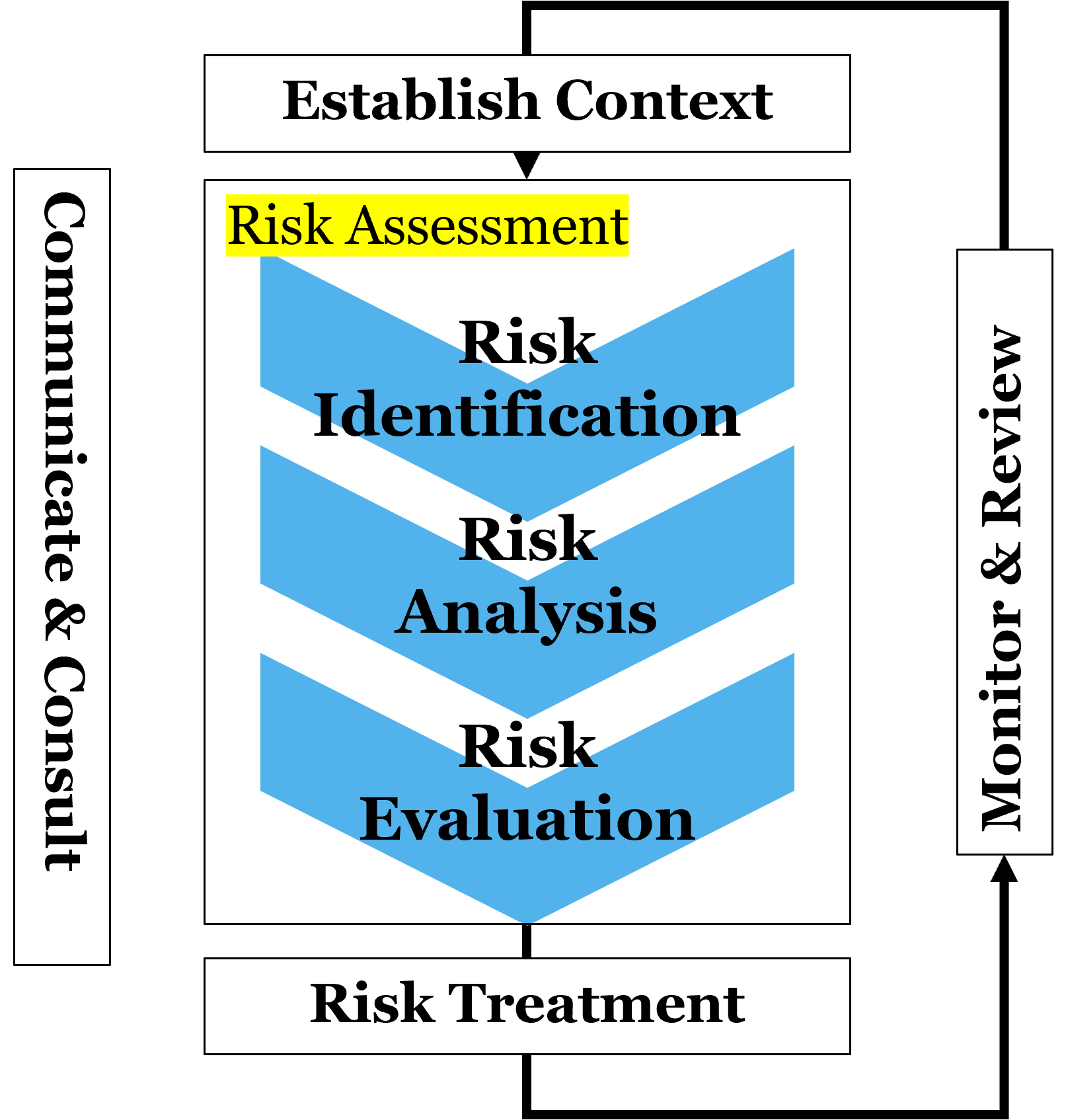
- Context, Communication & Consultation;

- Monitoring & Review, Risk Treatment; and

- Required Risk Reduction.

Transcript: System Safety Risk Analysis

What is System Safety?

To start with, here’s a little definition of system safety. System safety is the application of engineering and management principles, criteria, and techniques to achieve acceptable risk within a wider context.

This wider context is operational effectiveness - we want our system to do something. That's why we're buying it or making it. The system has to be suitable for its use. We've got some time and cost constraints, and we've got a life cycle. We can imagine we are developing something from concept, from cradle to grave.

And what are we developing? We're developing a system. An organization of hardware (or software) material, facilities, people, data, and services. All these pieces will perform a designated function within the system. The system will work within a stated or defined operating environment. It will work to produce specified results.

We've got three things here: a system; the operating environment in which it is designed to work; and, we have its function or application. Why did we buy it, or make it in the first place? What's it supposed to do? What benefits is it supposed to bring humankind? What does it mean in the context of the big picture?

That's what a system is. I'm not going to elaborate on systems theory or anything like that. That's a whole big subject on its own. But we're talking about something complex. We're not talking about a toaster. It's not consumer goods. It's something complicated that operates in the real world. And as I say, we need to understand those three things - system, environment, purpose - to work out Safety.

This is Module 2 of SSRAP

This is Module 2 from the System Safety Risk Assessment Program (SSRAP) Course. Risk Analysis Programs – Design a System Safety Program for any system in any application.

The full course comprises 15 lessons and 1.5 hours of video content, plus resources. It's on pre-sale at HALF PRICE until September 1st, 2024. Check out all the free preview videos here and order using the coupon “Pre-order-Half-Price-SSRAP”. But don't leave it too long because there are only 100 half-price courses available!

Meet the Author

Learn safety engineering with me, an industry professional with 25 years of experience. I have:

•Worked on aircraft, ships, submarines, ATMS, trains, and software;

•Tiny programs to some of the biggest (Eurofighter, Future Submarine);

•In the UK and Australia, on US and European programs;

•Taught safety to hundreds of people in the classroom, and thousands online;

•Presented on safety topics at several international conferences.
#AcceptableRiskCriteria #ALARPPrinciple #ApplyingtheALARPprinciple #Comprehensivesafetyengineeringtraining #Effectiveriskmitigationstrategies #HazardIdentificationandControl #Identifyandcontrolsafetyhazards #LearnSystemSafetyRiskAnalysis #Methodsforriskreductioninsafety #Onlinetrainingforsystemsafetyprofessionals #RealWorldRiskAnalysis #Realworldriskanalysistechniques #RiskMatrixApproach #RiskMitigationTechniques #RiskReductionMethods #SafetyEngineeringPrinciples #SystemSafetyRiskAnalysis #SystemSafetyTrainingOnline #Understandingacceptableriskcriteria #Usingariskmatrixforsafetyanalysis
Simon Di Nucci https://www.safetyartisan.com/2024/08/14/system-safety-risk-analysis/


System Safety Risk Analysis
In this module, System Safety Risk Analysis, we're going to look at how we deal with the complexity of the real world. We do a formal risk analysis because real-world scenarios are complex. The Analysis helps us to understand what we need to do to keep people safe. Usually, we have some moral and legal obligation to do it as well. We need to do it well to protect people and prevent harm to people.

This post is part of a series:

- Intro to System Safety Risk Assessment

- Start of System Safety Risk Assessment

- Hazard & Risk Basics (SSRAP Module 1)

- This is SSRAP Module 2.

Aim: How do we deal with real-world complexity?

- What is System Safety?

- The Need for Process;

- A Realistic, Useful, Powerful process:

- Context, Communication & Consultation;

- Monitoring & Review, Risk Treatment; and

- Required Risk Reduction.

Transcript: System Safety Risk Analysis

What is System Safety?

To start with, here’s a little definition of system safety. System safety is the application of engineering and management principles, criteria, and techniques to achieve acceptable risk within a wider context.

This wider context is operational effectiveness - we want our system to do something. That's why we're buying it or making it. The system has got to be suitable for its use. We've got some time and cost constraints and we've got a life cycle. We can imagine we are developing something from concept, from cradle to grave.

And what are we developing? We're developing a system. An organization of hardware, (or software) material, facilities, people, data and services. All these pieces will perform a designated function within the system. The system will work within a stated or defined operating environment. It will work to produce specified results.

We've got three things here: a system; the operating environment in which it is designed to work; and, we have its function or application. Why did we buy it, or make, it in the first place? What's it supposed to do? What benefits is it supposed to bring humankind? What does it mean in the context of the big picture?

That's what a system is. I'm not going to elaborate on systems theory or anything like that. That's a whole big subject on its own. But we're talking about something complex. We're not talking about a toaster. It's not consumer goods. It's something complicated that operates in the real world. And as I say, we need to understand those three things - system, environment, purpose - to work out Safety.

This is Module 2 of SSRAP

This is Module 2 from the System Safety Risk Assessment Program (SSRAP) Course. Risk Analysis Programs – Design a System Safety Program for any system in any application.

The full course comprises 15 lessons and 1.5 hours of video content, plus resources. It's on pre-sale at HALF PRICE until September 1st, 2024. Check out all the free preview videos here and order using the coupon “Pre-order-Half-Price-SSRAP”. But don't leave it too long because there are only 100 half-price courses available!

Meet the Author

Learn safety engineering with me, an industry professional with 25 years of experience, I have:

•Worked on aircraft, ships, submarines, ATMS, trains, and software;

•Tiny programs to some of the biggest (Eurofighter, Future Submarine);

•In the UK and Australia, on US and European programs;

•Taught safety to hundreds of people in the classroom, and thousands online;

•Presented on safety topics at several international conferences.
#AcceptableRiskCriteria #ALARPPrinciple #ApplyingtheALARPprinciple #Comprehensivesafetyengineeringtraining #Effectiveriskmitigationstrategies #HazardIdentificationandControl #Identifyandcontrolsafetyhazards #LearnSystemSafetyRiskAnalysis #Methodsforriskreductioninsafety #Onlinetrainingforsystemsafetyprofessionals #RealWorldRiskAnalysis #Realworldriskanalysistechniques #RiskMatrixApproach #RiskMitigationTechniques #RiskReductionMethods #SafetyEngineeringPrinciples #SystemSafetyRiskAnalysis #SystemSafetyTrainingOnline #Understandingacceptableriskcriteria #Usingariskmatrixforsafetyanalysis
Simon Di Nucci https://www.safetyartisan.com/2024/08/14/system-safety-risk-analysis/


Hazard and Risk Basics
What are the Hazard and Risk basics? So, what is this risk analysis stuff all about? What is 'risk'? How do you define or describe it? How do you measure it? When? Why? Who...?

In this free session, I explain the basic terms and show how they link together, and how we can break them down to perform risk analysis. I understand hazards and risks because I've been analyzing them for a long time. Moreover, I've done this for aircraft, ships, submarines, sensors, command-and-control systems, and lots of software!

Everyone does it slightly differently, but my 25+ years of diverse experience lets me focus on the basics. That allows me to explain it in simple terms. I've unpacked the jargon and focused on what's important.  

This post is part of a series:

- Intro to System Safety Risk Assessment

- Start of System Safety Risk Assessment

- This post is SSRAP Module 1

- System safety risk analysis (SSRAP Module 2)

-

https://youtu.be/dd30bczHlaI
Recap: Risk Basics

Topics: Hazard and Risk Basics

- Risk & Mishap;

- Probability & Severity;

- Hazard & Causal Factor;

- Mishap (accident) sequence; and

- Hazards: Tests & Example

Transcript: Hazard and Risk Basics

Let's get started with Module One. We're going to recap some Risk basics to make sure that we have a common understanding of risk. And that's important because risk analysis is something that we do every day. Every time you cross the road, or you buy something expensive, or you decide whether you're going to travel to something, or look it up online, instead.

You're making risk analysis decisions all the time without even realizing it. But we need something a little bit more formal than the instinctive thinking of our risk that we do all the time. And to help us do that, we need a couple of definitions to get us started.

What is Risk?

First of all, what is Risk? It's a combination of two things. First, the severity of a mishap or accident. Second, the probability that the mishap will occur. So it's a combination of severity and probability. We will see that illustrated in the next slide.

We'll begin by talking about ‘mishap’. Well, what is a mishap? A mishap is an event - or a series of events -resulting in unintentional harm. This harm could be death, injury, occupational illness, damage to or loss of equipment or property, or damage to the environment.

The particular standard we're looking at today covers a range of different harms. That's why we're focused on safety. And the term 'mishap' will also include negative environmental impacts from planned events. So, even if the cause is a deliberate event, we will include that as a mishap.

Probability and Severity

I said that the definition of risk was a combination of probability and severity. Here we got a little illustration of that...

This is Module 1 of SSRAP

This is Module 1 from the System Safety Risk Assessment Program (SSRAP) Course. Risk Analysis Programs – Design a System Safety Program for any system in any application.

The full course comprises 15 lessons and 1.5 hours of video content, plus resources. It's on pre-sale at HALF PRICE until September 1st, 2024. Check out all the free preview videos here and order using the coupon “Pre-order-Half-Price-SSRAP”. But don't leave it too long because there are only 100 half-price courses available!

Meet the Author

Learn safety engineering with me, an industry professional with 25 years of experience, I have:

•Worked on aircraft, ships, submarines, ATMS, trains, and software;

•Tiny programs to some of the biggest (Eurofighter, Future Submarine);

•In the UK and Australia, on US and European programs;

•Taught safety to hundreds of people in the classroom, and thousands online;

•Presented on safety topics at several international conferences.
#howtoriskassessment #howtoriskassessmentanalysis #learnriskassessment #learnriskassessmentanalysis #riskassess #riskassessment #riskassessmentanalysistechnique #riskassessmentanalysistraining #riskassessmentanalysistutorial #riskassessmenteducation #riskassessmentequation #riskassessmentguide #riskassessmentkeypoints #riskassessmentoutline #riskassessmentquestionstoask #riskassessmentskills #riskassessmenttechnique #riskassessmenttraining #riskassessmenttutorial #riskassessmentvideo #riskmanagement31000pdf
Simon Di Nucci https://www.safetyartisan.com/2024/07/31/ssrap-module-1-risk-basics/


Learn How to Perform System Safety Analysis
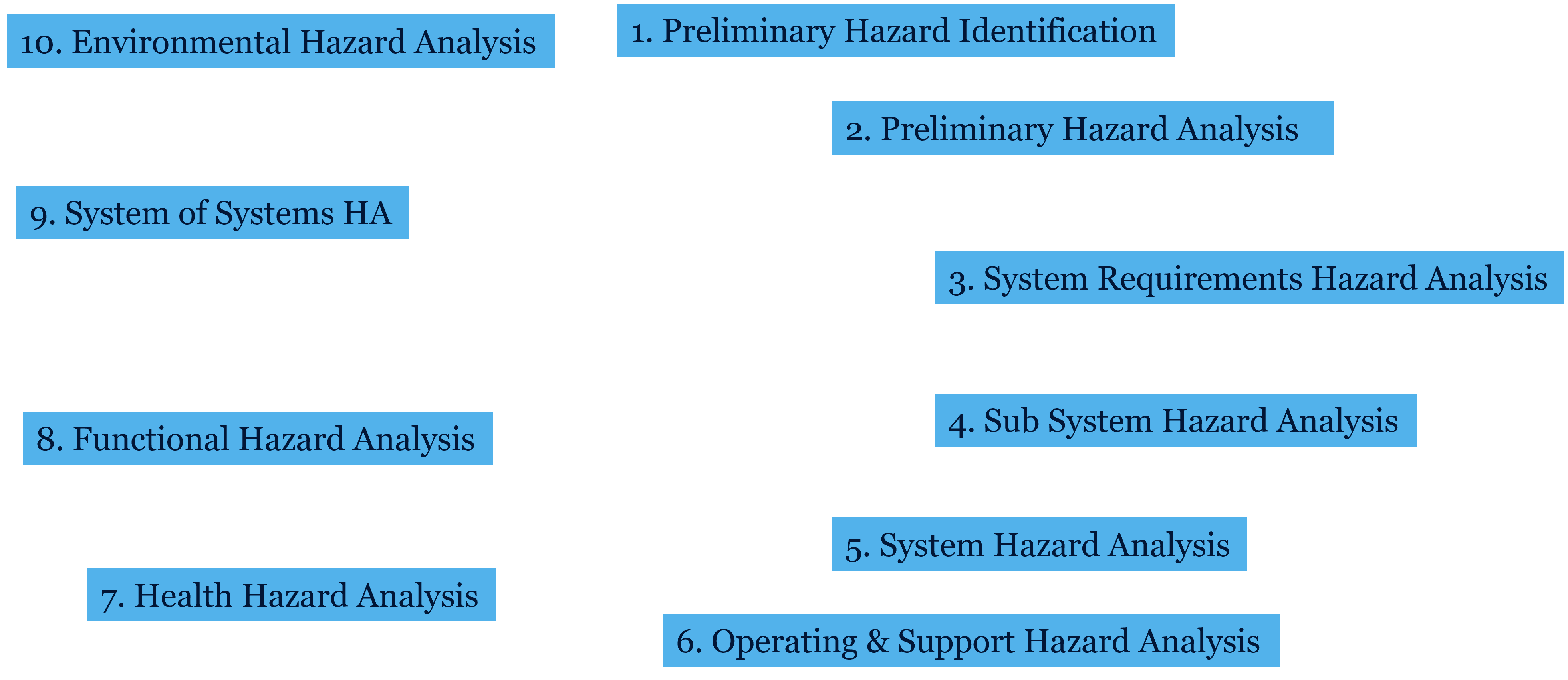
In this 'super post', we will Learn How to Perform System Safety Analysis. I will show you thirteen lessons that explain each of the ten analysis tasks, the analysis process, and how to combine those tasks into a program!

Follow the links to sample and buy lessons on individual tasks.

Introduction

Military Standard 882, or Mil-Std-882 for short, is one of the most widely used system-safety standards. As the name implies, this standard is used on US military systems, but it has found its way, sometimes in disguise, into many other programs around the world. It’s been around for a long time and is now in its fifth incarnation: 882E.

Unfortunately, 882 has also been widely misunderstood and misapplied. This is probably not the fault of the standard and is just another facet of its popularity. The truth is that any standard can be applied blindly – no standard is a substitute for competent decision-making.

In this series of posts, we will: provide awareness of this standard; explain how to use it; and discuss how to manage, tailor, and implement it. Links to each training session and to each section of the standard are provided in the following sections.

Mil-Std-882E Training Sessions

System Safety Process, full post here

Photo by Bonneval Sebastien on Unsplash

In this full-length (50 minutes) video, you will learn to:

- Know the system safety process according to Mil-Std-882E;

- List and order the eight elements;

- Understand how they are applied;

- Skilfully apply system safety using realistic processes; and

- Feel more confident dealing with multiple standards.

In System Safety Process, we look a the general requirements of Mil-Std-882E. We cover the Applicability of the 882E tasks; the General requirements; the Process with eight elements; and the application of process theory to the real world.

Design Your System Safety Analysis Program

Photo by Christina Morillo from Pexels

Learn how to Design a System Safety Program for any system in any application.

Learning Objectives. At the end of this course, you will be able to:

- Define what a risk analysis program is;

- List the hazard analysis tasks that make up a program;

- Select tasks to meet your needs; and

- Design a tailored risk analysis program for any application.

Analysis: 200-series Tasks

Preliminary Hazard Identification, Task 201

Identify Hazards.

In this video, we find out how to create a Preliminary Hazard List, the first step in safety assessment. We look at three classic complementary techniques to identify hazards and their pros and cons. This includes all the content from Task 201, and also practical insights from my 25 years of experience with Mil-Std-882.

You can buy the full video, plus lots of bonus material, here.

Preliminary Hazard Analysis, Task 202

See More Clearly.

In this 45-minute session, The Safety Artisan looks at Preliminary Hazard Analysis, or PHA, which is Task 202 in Mil-Std-882E. We explore Task 202’s aim, description, scope, and contracting requirements. We also provide value-adding commentary and explain the issues with PHA – how to do it well and avoid the pitfalls.

System Requirements Hazard Analysis, Task 203

Law, Regulations, Codes of Practice, Guidance, Standards & Recognised Good Practice.

In this 45-minute session, The Safety Artisan looks at Safety Requirements Hazard Analysis, or SRHA, which is Task 203 in the Mil-Std-882E standard. We explore Task 203’s aim, description, scope, and contracting requirements. SRHA is an important and complex task, which needs to be done on several levels to be successful. This video explains the issues and discusses how to perform SRHA well.

Sub-system Hazard Analysis, Task 204

Breaking it down to the constituent parts.

In this video lesson, The Safety Artisan looks at Sub-System Hazard Analysis, or SSHA, which is Task 204 in Mil-Std-882E. We explore Task 204’s aim, description, scope, and contracting requirements. We also provide value-adding commentary and explain the issues with SSHA – how to do it well and avoid the pitfalls.

System Hazard Analysis, Task 205

Putting the pieces of the puzzle together.

In this 45-minute session, The Safety Artisan looks at System Hazard Analysis, or SHA, which is Task 205 in Mil-Std-882E. We explore Task 205’s aim, description, scope, and contracting requirements. We also provide value-adding commentary, which explains SHA – how to use it to complement Sub-System Hazard Analysis (SSHA, Task 204) to get the maximum benefits for your System Safety Program.

Operating and Support Hazard Analysis, Task 206

Operate it, maintain it, supply it, dispose of it.

In this full-length session, The Safety Artisan looks at Operating & Support Hazard Analysis, or O&SHA, which is Task 206 in Mil-Std-882E. We explore Task 205’s aim, description, scope, and contracting requirements. We also provide value-adding commentary, which explains O&SHA: how to use it with other tasks; how to apply it effectively on different products; and some of the pitfalls to avoid. We refer to other lessons for specific tools and techniques, such as Human Factors analysis methods.

Health Hazard Analysis, Task 207

Hazards to human health are many and various.

In this full-length (55-minute) session, The Safety Artisan looks at Health Hazard Analysis, or HHA, which is Task 207 in Mil-Std-882E. We explore the aim, description, and contracting requirements of this complex Task, which covers: physical, chemical & biological hazards; Hazardous Materials (HAZMAT); ergonomics, aka Human Factors; the Operational Environment; and non/ionizing radiation. We outline how to implement Task 207 in compliance with Australian WHS. 

Functional Hazard Analysis, Task 208

Components where systemic failure dominates random failure.

In this full-length (40-minute) session, The Safety Artisan looks at Functional Hazard Analysis, or FHA, which is Task 208 in Mil-Std-882E. FHA analyses software, complex electronic hardware, and human interactions. We explore the aim, description, and contracting requirements of this Task, and provide extensive commentary on it. 

System-Of-Systems Hazard Analysis, Task 209

Existing systems are often combined to create a new capability.

In this full-length (38-minute) session, The Safety Artisan looks at Systems-of-Systems Hazard Analysis, or SoSHA, which is Task 209 in Mil-Std-882E. SoSHA analyses collections of systems, which are often put together to create a new capability, which is enabled by human brokering between the different systems. We explore the aim, description, and contracting requirements of this Task, and an extended example to illustrate SoSHA. (We refer to other lessons for special techniques for Human Factors analysis.)

Environmental Hazard Analysis, Task 210

Environmental requirements in the USA, UK, and Australia.

This is the full, one-hour session on Environmental Hazard Analysis (EHA), which is Task 210 in Mil-Std-882E. We explore the aim, task description, and contracting requirements of this Task, but this is only half the video. We then look at environmental requirements in the USA, UK, and Australia, before examining how to apply EHA in detail under the Australian/international regime. This uses my practical experience of applying EHA. 
#Milstd882Technique #Milstd882Training #Milstd882tutorial #Milstd882Video #Milstd882eTechnique #Milstd882eTraining #Milstd882etutorial #Milstd882eVideo #SafetystandardTechnique #SafetystandardTraining #Safetystandardtutorial #SafetystandardVideo #SubsystemhazardanalysisTechnique #SubsystemhazardanalysisTraining #Subsystemhazardanalysistutorial #SubsystemhazardanalysisVideo #SystemsafetyengineeringTechnique #systemsafetyengineeringtraining #Systemsafetyengineeringtutorial #SystemsafetyengineeringVideo
Simon Di Nucci https://www.safetyartisan.com/2021/10/20/learn-how-to-perform-system-safety-analysis/


Consultation, Cooperation & Coordination CoP
In this 30-minute session, we look at the Consultation, Cooperation & Coordination Code of Practice (CC&C CoP). We cover the Commonwealth and Model versions of the CoP, appendices & a summary of detailed requirements; and further commentary. This CoP is one of the two that are generally applicable.

https://youtu.be/CARK4tJnX28
This is the three-minute demo of the full, 30-minute video.

see the full-length video here

Consultation, Cooperation & Coordination CoP: Topics

- CC&C in the Federal or Commonwealth CoP;

- Extra CC&C in the Model CoP;

- (Watch out for Jurisdiction);

- Further commentary; and

- Where to get more information.

Consultation, Cooperation & Coordination CoP: Transcript

Click Here for the Transcript
Consultation, Cooperation & Coordination CoP

Hello, everyone, and welcome to The Safety Artisan. I'm Simon and today we're going to be talking about a very useful subject, which is Codes of Practice. And one Code of Practice in particular, which is the Code of Practice for Consultation, Cooperation and Coordination. And it doesn't sound like the most exciting subject, I'll admit, but this is one of only two Codes of Practice that you must be aware of if operating in Australia, or exporting to Australia, or importing stuff to Australia, whatever it might be. The other Code of Practice that you must be aware of is the Risk Management Code of Practice. There are a lot more Code of Practices than these two, but they don't always apply. So, I mean if you're not doing anything to do with asbestos, you don't have to worry about what it says in the Asbestos Code of Practice. But this one you do because it applies to everything.

Topics for this Session

And I've used this Code of Practice to help clients and to do particular things and help everybody understand what we have to do, and it’s very useful. And in this session, I will be explaining how to get the best out of this Code of Practice and, at the end, where to get more information. So, I hope you'll find that useful. So we're going to be talking about the - I'm just going to call it the C, C & C CoP for short because it's a dreadful mouthful, isn't it? We're going to be looking at the federal or Commonwealth Code of Practice and then we're going to look at some extras in the Model Code of Practice. So just to explain that briefly, the Model Code of Practice is on the Safe Work Australia website, and that is the Model from which all other CoPs are developed. However, Safe Work Australia is not a regulator. So individual regulators and the example I'm using is the Commonwealth one- or Comcare, as it's known- they have chosen to edit the Model CoP and change it and remove quite a bit of material. Now, why they chose to do that, I do not know. So, you have to be careful which jurisdiction you're operating in, in Australia. If you are in a Commonwealth workplace, then you need to apply the Commonwealth or the federal version of WHS, including this CoP. And if you're in a state or territory workplace, or a commercial workplace in a state or territory, you need to apply the relevant one there. And just to complicate matters, Western Australia has not yet introduced WHS and Victoria has no plans to do so. So, of course, in Australia, we like to make life simple for ourselves, don't we? Oh no, we don't!

So after I've gone through some basics of what's in the CoP, because you'll see there's an awful lot of material in there that I'm not going to talk about. I produced some commentary that I think you will find helpful and where to get more information, as I promised. So, let's get on with it!

When to Consult

So, first of all- and you'll notice that I'm only including those bits really that say when you must do something. So, this is quoting Section 49 of the WHS Act, which says that if you're conducting a business or some kind of undertaking- so it's not just a commercial business, but anything- you must consult with your workers when identifying hazards and assessing risks, making decisions about how you're going to control those risks, making decisions about the adequacy of facilities for welfare, proposing changes that affect health and safety, and making decisions about procedures for consulting with workers, providing information and training, and so on and so forth. So, there's a whole raft of things that you have to consult your workers on. So, this is all workplace so far. Now, in my role as a safety consultant, I'm often working with people who are introducing they're buying bits of kit, or designing or importing bits of kit, and there is no work yet, so there's no workers. But we always try and get a representative of the end-user involved because that really does help you do good quality safety work and avoid- to be honest- wasting time and money on things that are theoretically possible or theoretically sound problematic but in reality, it just doesn't arise for whatever reason. So, I really do recommend getting those end-user representatives involved.

Effective Consultation

And if we go on to Section 48- for some reason, the cop quotes these things in reverse order- to be effective in consultation, we require information to be shared. Workers have got to have a reasonable opportunity to express their views. They've got to have a reasonable opportunity to contribute to decisions. Their views must be taken into account and they must be advised of the outcomes of consultation. So, all good common-sense stuff, I would think. Nothing controversial about this and that- to be honest- that's a feature of CoPs. They tell you to do things that you think, “Yeah, I really ought to be doing that!”.

Consultation Procedures

Continuing with the countdown, we're on to Section 47. Consultation procedures, again more basic common sense. If you’ve agreed to procedures for consultation, you must follow those procedures. It's not rocket science, is it, folks? Let's move on.

Sections 16 & 46

OK, now this is a bit more interesting, I think. This is getting into the real guts of this Code of Practice because where consultation, cooperation and coordination really come into play is where you've got multiple stakeholders, multiple duty holders- that is to say, those with a duty to protect the health and safety of people. Where multiple stakeholders, duty holders, have to get together and work together in order to come up with a solution. So the law says- Section 16 says where more than one person has a duty for the same thing, for the same matter, each person retains that responsibility. You cannot wriggle out of your responsibility just because you only control a bit over here and not over here. So, the two duty holders who have control here and here, they have to work together. The law says so. And so this is really the guts of this Code of Practice. And they must work together to discharge their duties to the extent to which they can. And the extent to which you can is the extent to which you influence and control the matter. So, WHS law is very big about control. If you have control of the bit, you've got to do your bit and you must work with people who have control of other things. You might be designing or buying a piece of kit. Other people might control the workplace. There might be another group of people who represent the operators, and then another group who represent the maintainers, and so on and so forth. They've all got to be involved if they're relevant to managing risk. And of course, as risk in WHS is cradle to grave, then pretty much everyone is involved.

So, Section 46, and in these situations where you have got multiple duty holders, each person with a duty must, so far as is reasonably practicable, consult, cooperate and coordinate with all other persons. And I'm going to do a session quite soon on so far as is reasonably practicable, or SOFARP, and in it, I will tell you that SOFARP is an objective test and the law sets objective expectations for what a reasonable person would do. So, you can't just say, “Well, I'll decide what is reasonable or not reasonable.”. The law has already done it for you and there's guidance out there to help you so follow it. So, we will do something on that guidance, about what is reasonable and what is reasonably practicable. But we've got to work with each other SOFARP. For the greater good! Sorry, that's a quote from one of my favourite comedy films, by the way.

CoP Appendices

So, appendices to the CoP. If we look at the appendices in the federal or Commonwealth CoP, there are only three. So, they've got some examples of arrangements. They've got a consultation checklist, and they've got an appendix on C, C and C activities, which is all good. That's all good stuff. In addition, if you go back to the Model Code of Practice, you will find that there's also a glossary. Yes, they've got the consultation checklist. And then in Appendix E, you've got a summary of all the consultation requirements in the WHS regulations, which is really useful. So even if in the CoP that applies to you, your version of the CoP doesn't have the appendix, I would recommend going and having a look in the Model CoP. And if you're not aware what you got, if you've got a high-risk business, then you're going to find some extra requirements in the regulations. So, I would go and have a look at Appendix E if you're doing anything that could kill one or more people. So, if you're dealing with more serious risks, then I would go and have a look at that just to- as a good lead in to the regulations. If you already know the regulations backwards, then great, you don't need to bother. But there are over 600 regulations in WHS, so it's always worth checking up to make sure you haven't missed anything.

Extras in the Model CoP

We've kind of started already, but now we've really started we're going to talk about the extras in the Model Code of Practice.

Further Duties of PCBUs

In the modal Code of Practice, we get a reminder that designers, manufacturers, importers and suppliers have got safety responsibilities to ensure, so far as is reasonably practicable, that the plant's substance or structure that they are designing, etc, etc, is without risks to health and safety. And they've got a duty to carry out testing and analysis and to provide specific safety-related information about plant or substance. So there's a good reminder in there that we all, wherever we are in the supply chain, we've all got these responsibilities. And to assist in meeting these duties, the WHS regulations require manufacturers to consult with designers, importers to consult with designers and manufacturers, and whoever commissions construction work to consult with the designer of the structure, for example. There's a lot of useful extra pointers in the Model Code of Practice, which may not be in the version that, technically speaking/strictly speaking, you have to follow. So, worth a look.

Officers (of the PCBU)

And then there's also a reminder to officers of the business or undertaking. Basically, officers says- for example, company directors, those kinds of people, have a duty to exercise due diligence. And you have to go look at due diligence to see what that is. There are basically six bullet points in the act that describe due diligence. Again, it's all good common-sense stuff. There’s nothing esoteric in there or objectionable. And that due diligence includes taking reasonable steps to ensure that you've got appropriate processes for complying with the duty to consult as well as to duty- with workers sorry, as well as consulting, cooperating and coordinating with other duty holders. And there's further guidance on what's an officer in that interpretive guideline and under Section 27 of the law.

Principal Contractors

And then here is one I picked out. I've not got all of the requirements, but here's a useful one. There’s a particular regulation, number 309, that says if you're doing construction work the principal contractor for a construction project has a specific duty under WHS regulations to document in their WHS management plan the arrangements for consultation, cooperation and coordination. Now that's not unique, as we've just seen, to construction, but there is a specific requirement in there for a principal contractor. And WHS assumes a particular structure where you've got a prime contractor, or a principal contractor, who is leading the construction for the customer. So, have a look at that. There's also a CoP on the construction of structures so if you're in that game you'll find that useful too.

Major Hazard Facilities

And then I've got one slide on major hazard facilities. Now, a major hazard facility, strictly speaking, is a facility where you've got enough of a dangerous chemical- and it might be flammable, it might be toxic, it might be explosive, whatever it is. There's a whole list of chemicals in the regulations and it says if you've got so many tons of this or that, you've hit the threshold and you are operating a major hazard facility. There's a whole raft of extra regulations that apply to MHFs. And it says, for example, regulation 552 requires a major facility- sorry, a major hazard facilities safety case outline- so a safety case report by another name- to include a description of the consultation with workers that's been undertaken in the preparation of the safety case. Again, you've got a very specific requirement to consult with workers and to document it. Which, interestingly enough, generally, you don't have a duty to do that. It's not mandatory to document consultation. It's recommended. It's a good idea but you don't, strictly speaking, have to do it unless you're operating an MHF. And as it says there, there's a whole bunch of regulations that cover consultation about MHFs. But as I said, if you look at Appendix E of the Model Code of Practice, it's got them all listed, which is very helpful.

Detailed Requirements

A quick word about detailed requirements. Every Code of Practice contains detailed requirements that follow this formula. So, there are three words that indicate a legal requirement that must be complied with. And those three words are ‘must’, ‘requires’- or variations on that word-, and ‘mandatory’. So, any instances of those words- Probably not always, because they occasionally you come across a usage of ‘must’ or ‘requires’ where you go “Actually, that's just an English use-“ (if you know what I mean)-  “That’s just an English use of those words! It’s not really indicating a mandatory requirement”. But most of them do. So, in the Commonwealth Code of Practice, we have 41 instances of ‘must’. So, you've got to comply with those. You have 46 instances of ‘require’ and you've got to comply with those by law. Now, interestingly, in the Model Code of Practice, those numbers go up to 71 and 58, respectively. So, there're a lot more requirements in the Model Code of Practice. So, again, do make sure you've got the right Code of Practice that's been issued by the regulator for your jurisdiction. Because otherwise you might miss something you need to comply with or you might be complying with something that, strictly speaking, you don't have to. Although, of course, it's not a bad thing to do that but you don't have to.

Then there's the use of the word ‘should’, which is a recommended course of action, and ‘may’, suggests something that is optional. And again, in the Commonwealth Code of Practice, there are 62 instances of ‘should’ and 86 of ‘may’. Although I note that one of those instances of may, at least one, refers to the month of May when that Code of Practice was published. So, you've got to go through and make sure that they are relevant. And then it's slightly more in the Model Code of Practice. It’s 66 and 90, respectively. But the difference is not so great for the mandatory stuff. Now as I've said before, and in the risk management Code of Practice, my advice to you is you must comply with ‘musts’ and ‘required’s. ‘Should’ is recommendation so I would suggest complying with that unless you've got a good reason not to. In which case, I would document the fact that you've got a good reason not to and why you're not going to. And then ‘may’ is optional. You can do it if you want to and you can record the fact that you've considered those things and reject them if you want to but they are only options. So, I think there's- effectively we've got three tiers here. We've got ‘must comply’, ‘recommended’, and ‘you can do this if you think it's a good idea’.

And so the comment at the bottom, CoPs are not huge documents that typically a few tens of pages long. They will repay careful reading because you do have to comply with quite a lot of stuff that's in there and that's very clearly signposted, by the way. And also, of course, this particular Code of Practice is very useful for safety management plans. If you've got to write a safety management plan and you want to know what you have to include in it, then look in this Code of Practice and look in the Risk Management Code of Practice and make sure you include everything that is mandatory or ‘must’ or ‘requires’ and look at all the other stuff as well. And why not? If the copyright permits you to do so, which it usually does- not always, but usually. If the copyright permits you to do so and just copy and paste the stuff into your plan and then you know that you've got what you need. Then you can change the wording if you need to. But it will save you a lot of bother if you've got to write a safety management plan. It'll help you to make sure you've got everything you need to and it will save you a lot of effort. So, I recommend that I've done that myself.

Commentary #1

I think I've just got a couple of slides of commentary. It's worth reiterating that Codes of Practice are for all Australian industry. Whether it be a sole trader like myself operating out of our study or their garage or something, or whether it be a small operation- a family-run garage or shop, or whether it be the biggest corporation in Australia, whoever that is- if you're running a major mining operation. So, Codes of Practice provide minimum requirements. These are the things that you must comply with. In high-risk industries, you're probably going to have to do a lot more. And they do have a workplace application. So, they are written for the workplace. They're not really written for the designer, manufacturer, importer, supplier, etc. But nevertheless, it is very, very helpful if you are those people to look at the CoP in order to get an idea of what your customers have got to comply with and therefore what you're going to have to supply.

And as I've already said, CoP will repay careful reading because whilst they are guidance, they are really more than guidance. If you are ignorant of CoP and you don't do what they say you are exposing yourself to prosecution. So, see my introduction to Codes of Practice where I talk about that. There are three reasons why you must be aware of Codes of Practice. And this is one of those two Codes of Practice that everyone must be aware of. The others- if you're working with asbestos or welding or whatever it might be then there are specific Codes of Practice that you must be aware of for those activities. But this is one of those ones that applies to absolutely everybody, potentially. And as I've said before, the Model CoP has more detail than maybe some of the regulator-enforced Codes of Practice, which you will, I think, find helpful for higher risk applications. Whether legally you've got an MHF or not.

Commentary #2

And in fact, that's my point in slide two. So, not everyone is required to have a formal safety management system for managing safety risk in a- while something is in service, while it's being used. So, this CoP does not require us to have a formal safety management system, but it is required for major hazard facilities.
#AustralianWHS #CodesofPractice #Consult #Cooperate #Coordinate #coursesafetyengineering #engineersafety #ineedsafety #knowledgeofsafety #learnsafety #needforsafety #safetyblog #safetydo #safetyengineer #safetyengineerskills #safetyengineertraining #safetyengineeringcourse #safetyprinciples #softwaresafety #theneedforsafety #WHSCodeofPractice
Simon Di Nucci https://www.safetyartisan.com/2020/11/21/consultation-cooperation-coordination-cop/

Safety Concepts Part 1
In this 'Safety Concepts Part 1' Blog post, The Safety Artisan looks at the meaning of the term "safe". I look at an objective definition of safe - objective because it can be demonstrated to have been met.

This fundamental topic provides the foundation for all other safety topics, and it isn't complex. The basics are simple, but they need to be thoroughly understood and practiced consistently to achieve success.

https://youtu.be/IKAZ3KLsDW8
System Safety Concepts - highlights.

Safety Concepts Part 1: Topics

- A practical (useful) definition of ‘safe’:

- What is risk?

- What is risk reduction?

- What are safety requirements?

- Scope:

- What is the system?

- What is the application (function)?

- What is the (operating) environment?

Safety Concepts Part 1: Transcript

Hi everyone and welcome to the Safety Artisan, where you will find professional, pragmatic, and impartial advice. Whether you want to know how safety is done or how to do it, I hope you’ll find today’s session helpful.

It’s the 21st of September 2019 as I record this. Welcome to the show. So, let’s get started. We’re going to talk today about System Safety concepts. What does it all mean?  We need to ask this question because it’s not obvious, as we will see.

If we look at a dictionary definition of the word ‘safe’, it’s an adjective: to be protected from or not exposed to danger or risk. Not likely to be harmed or lost. There are synonyms – protect, shield, shelter, guard, and keep out of harm’s way. They’re all good words, and I think we all know what we’re talking about. However, as a definition, it’s too imprecise. We can’t objectively say whether we have achieved safety or not.

A Practical Definition of ‘Safe’

What we need is a better definition, a more practical definition. I’ve taken something from an old UK Defence Standard. Forget about which standard, that’s not important. It’s just that we’re using a consistent set of definitions to work through basic safety concepts. And it’s important to do that because different standards, come from different legal systems and they have different philosophies. So, if you start mixing standards and different concepts together, that doesn’t always work.

OK so whatever you do, be consistent. That’s the key point. We’re going to use this set of definitions from the UK Defence Standard because they are consistent.

In this standard, ‘safe’ means: “Risk has been demonstrated to have been reduced to a level that is ALARP, and broadly acceptable or tolerable. And relevant prescriptive safety requirements have been met. For a system, in a given application, in a given Operating Environment.” OK, so let’s unpack that.

System Safety – Risk

So, we start with risk. We need to manage risk. We need to show that risk has been reduced to an acceptable level. As required perhaps by law, regulation, or a standard. Or just good practice in a particular industry. Whatever it is, we need to show that the risk of harm to people has been reduced. Not just any old reduction, we need to show that it’s been reduced to a particular level. Now in this standard, there are two tests for that.

And they’re both objective tests. The first one says as low as reasonably practicable. Basically, it’s asking have all reasonably practicable risk reduction measures have been taken. So that’s one test. And the second test is a bit simpler. It’s basically saying reduce the absolute level of risk to something that is tolerable or acceptable. Now don’t worry too much about precisely what these things mean. The purpose of today is to note that we’ve got an objective test to say that we’ve done enough.

System Safety – Requirements

So that’s dealt with risk. Let’s move on to safety requirements. If a requirement is relevant, then we need to apply it. If it’s prescriptive, if it says you must do this, or you must do that. Then we need to meet it. There are two separate parts to this ‘Safe’ thing: we’ve got to meet requirements; and, we’ve got to manage risk. We can’t use one as an excuse for not doing the other.

So just because we reduce risk until it’s tolerable or acceptable doesn’t mean that we can ignore safety requirements. Or vice versa. So those are the two key things that we’ve got to do. But that’s not actually quite enough to get us there. Because we’ve got to define what we’re doing, with what, and in what context. Well, we’re reducing the risk of a system. And the system might be a physical thing.

Defining the Scope: The System

It might be a vehicle, an airplane, a ship, or a submarine, it might be a car or a truck. Or it might be something a bit more intangible. It might be a computer program that we’re using to make decisions that affect the safety of human beings, maybe a medical diagnosis system. Or we’re processing some scripts or prescriptions for medicine and we’ve got to get it right. We could poison somebody. So, whether it’s a tangible or an intangible system.

We need to define it. And that’s not as easy as it sounds, because if we’re applying system safety, we’re doing it because we have a complex system. It’s not a toaster. It’s something a bit more challenging. Defining the system carefully and precisely is really important and helpful. So, we define what our system is, our thing, or our service. The system. What are we doing with it? What are we applying it to?

Defining the Scope: The Application

What are we using it for? Now, just to illustrate that no standard is perfect. Whoever wrote that defense standard didn’t bother to define the application. Which is kind of a major stuff-up to be honest, because that’s really important. So, let’s go back to an ordinary dictionary definition just to get an idea of what it means. By the way, I checked through the standard that I was referring to, and it does not explain it in this standard.

What it means by the application. Otherwise, I would use that by preference. But if we go back to the dictionary, we see application: the act of putting something into operation. OK, so, we’re putting something to use. We’re implementing, employing it, or deploying it maybe we’re utilizing it, applying it, executing it, enacting it. We’re carrying it out, putting it into operation, or putting it into practice. All useful words that help us to understand.

I think we know what we’re talking about. So, we’ve got a thing or a service. Well, what are we using it for? Quite obviously, you know a car is probably going to be quite safe on the road. Put it in water and it probably isn’t safe at all. So, it’s important to use things for their proper application, to the use to which they were designed. And then, kind of harking back to what I just said, the correct operating environment.

Defining the Scope: The Operating Environment

For this system, and the application to which we will put it to. So, we’ve got a thing that we want to use for something. What’s the operating environment in which it will be safe? What is it qualified or certified for? What’s the performance envelope that it’s been designed for? Typically, things work pretty well within the operating environment, within the envelope for which they were designed. Take them outside of that envelope and they perform not so well.

Maybe not at all. You take an airplane too high and the air is too thin, and it becomes uncontrollable. You take it too low and it smashes into the ground. Neither outcome is particularly good for the occupants of the airplane. Or whoever happens to be underneath it when it hits the ground. All of those three things:  what is the system? What are we doing with it? and where are we doing it? All those things have to be defined. Otherwise, we can’t really say that risk has been dealt with, or that safety requirements have been met.

System Safety: why Bother?

So, we’ve spent several slides just talking about what safe means, which might seem a bit over the top. But I promise you it is not, because having a solid understanding of what we’re trying to do is important in safety. Because safety is intangible. So, we need to understand what it is we’re aiming for. As some Greek bloke said, thousands of years ago: “If you don’t know to which port, you are bound, then no wind is favorable.”

It’s almost impossible to have a satisfactory Safety Program if you don’t know what you’re trying to achieve. Whereas, if you do have a precise understanding of what you’re trying to achieve, you’ve got a reasonably good chance of success. And that’s what it’s all about.

Copyright

Well, I’ve quoted you some information from a UK government website. And I’ve done so in accordance with the terms of its Creative Commons license. More information about the terms of that can be found on this page.

End: Safety Concepts Part 1

If you want more, if you want to unpack all the Major Definitions, all the system safety concepts that we're talking about, then there's the second part of this video, which you can see here.

I hope you enjoy it. Well, that's it for the short video, for now. Please go and have a look at the longer video to get the full picture. OK, everyone, it's been a pleasure talking to you and I hope you found that useful. I'll see you again soon. Goodbye.

Back to the Start Here Page.

Meet the Author

Learn safety engineering with me, an industry professional with 25 years of experience. I have:

•Worked on aircraft, ships, submarines, ATMS, trains, and software;

•Tiny programs to some of the biggest (Eurofighter, Future Submarine);

•In the UK and Australia, on US and European programs;

•Taught safety to hundreds of people in the classroom, and thousands online;

•Presented on safety topics at several international conferences.
#definitionofsafe #definitionofsafety #definitionofsafetyengineering #definitionofsafetyhazard #definitionofsafetyincident #definitionofsafetymanagementsystem #definitionofsafetymeasures #definitionofsafetyprecautions #definitionofsafetyrisk #howwouldyoudefinesafety #meaningofsafe #meaningofsafety #safemeaning #safetyconcepts #whataretheimportanceofsafetymeasures #whatdoessafetymeasuresmean #whatdoesthewordsafetymeantoyou #whatissafe #whatsafemeans
Simon Di Nucci https://www.safetyartisan.com/2019/09/22/safety-concepts-part-1/

The 2023 Digest The 2023 Digest brings you all The Safety Artisan's blog posts from last year. I hope that you find this a useful resou...