Sunday, December 28, 2025


Lessons Learned from a Fatal Accident
Lessons Learned: in this 30-minute video, we learn lessons from an accident in 2016 that killed four people on the Thunder River Rapids Ride in Queensland. The coroner's report was issued this year, and we went through the summary of that report. In it, we find failings in WHS Duties, Due Diligence, risk management, and failures to eliminate or minimize risks So Far As is Reasonably Practicable (SFARP). We do not 'name and shame', rather we focus on where we can find guidance to do better.

https://youtu.be/QaSoFld7W0g
In 2016, four people died on the Thunder River Rapids Ride.

Lessons Learned: Key Points

We examine multiple failings in:

- WHS Duties;

- WHS Due Diligence;

- Risk management; and

- Eliminating or minimizing risks So Far As is Reasonably Practicable (SFARP).

Transcript: Lessons Learned from a Theme Park Tragedy

Introduction

Hello, everyone, and welcome to the Safety Artisan: purveyors of fine safety engineering training videos and other resources. I'm Simon, and I'm your host and today we're going to be doing something slightly different. So, there are no PowerPoint slides. Instead, I'm going to be reading from a coroner's report from a well-known accident here in Australia, and we're going to be learning some lessons in the context of WHS workplace health and safety law.

Disclaimer

Now, I'd just like to reassure you before we start that I won't be mentioning the names of the deceased. I won't be sharing any images of them. And I'm not even going to mention the firm that owned the theme park because this is not about bashing people when they're down. It's about us as a community learning lessons when things go wrong to fix the problem, not the blame. So that's what I'd like to emphasize here.

The Coroner's Report

So, I'm just going to I'm just turning to the summary of the coroner's report. The coroner was examining the deaths of four people back in 2016 on what was called the Thunder River Rapids Ride. Or TRRR or TR3 for short because it's a bit of a mouthful. This was a water ride, as the name implies, and what went wrong was that the water level dropped. Rafts, these circular rafts that went down the rapids, went down the chute, got stuck. Another raft came up behind the stuck raft and went into it. One of the rafts tipped over. These rafts seat six people in a circular configuration. You may have seen them. They're in - different versions of this ride are in lots of theme parks.

But out of the six, unfortunately, the only two escaped before people were killed, tragically. So that's the background. That happened in October 2016, I think it was. The coroner's report came out a few months ago, and I've been wanting to talk about it for some time because it illustrates very well several issues where WHS can help us do the right thing.

WHS Duties

So, first of all, I'm looking at the first paragraph in the summary, the coroner starts off; the design and construction of the TRRR at the conveyor and unload area posed a significant risk to the health and safety of patrons. Notice that the coroner says the design and construction. Most people think that WHS only applies to workplaces and people managing workplaces, but it does a lot more than that. Sections 22 through 26 of the Act talk about the duties of designers, manufacturers, importers, suppliers, and then people who commissioned, installed, et cetera.

So, WHS supplies duties on a wide range of businesses and undertakings, and designers and constructors are key. There are two of them. Now, it's worth noting that there was no importer here. The theme park, although the TRRR ride was similar to a ride available commercially elsewhere, for some reason, they chose to design and build their version in Queensland. Don't know why. Anyway, that doesn't matter now. So, there was no importer, but otherwise, even if you didn't design and construct the thing, if you imported it, the same duties still apply to you.

No Effective Risk Assessment

So, the coroner then goes on to talk about risks and hazards and says each of these obvious hazards posed a risk to the safety of patrons on the ride and would have been easily identifiable to a competent person had one ever been commissioned to conduct a risk and hazard assessment of the ride. So, what the coroner is saying there is, “No effective risk assessment has been done”. Now, that is contrary to the risk management code of practice under WHS and also, of course, that the definition of SFARP, so far as reasonably practicable, basically is a risk assessment or risk management process. So, if you've not done effective risk management, you can't say that you've eliminated or minimized risks SFARP, which is another legal requirement. So, a double whammy there.

Then moving on. “Had noticed been taken of lessons learned from the preceding incidents, which were all of a very similar nature …” and then he goes on. That's the back end of a sentence where he says, you didn't do this, you had incidents on the ride, which are very similar in the past, and you didn't learn from them. And again, concerning reducing risks SFARP, Section 18 in the WHS Act, which talks about the definition of reasonably practicable, which is the core of SFARP, talks about what ought to have been known at the time.

So, when you're doing a risk assessment or maybe you're reassessing risk after a modification - and this ride was heavily modified several times or after an incident - you need to take account of the available information. And the owners of TRRR the operators didn't do that. So, another big failing.

The coroner goes on to note that records available concerning the modifications to the ride are scant and ad hoc. And again, there's a section in the WHS risk management code of practice about keeping records. It's not that onerous. I mean, the COP is pretty simple but they didn't meet the requirement of the code of practice. So, bad news again.

Due Diligence

And then finally, I’ve got to the bottom of page one. So, the coroner then notes the maintenance tasks undertaken on the ride whilst done so regularly and diligently by the staff, seemed to have been based upon historical checklists which were rarely reviewed despite the age of the device or changes to the applicable Australian standards. Now, this is interesting. So, this is contravening a different section of the WHS Act.

Section 27, talks about the duties of officers and effectively that sort of company directors, and senior managers. Officers are supposed to exercise due diligence. In the act, due diligence is fairly simple- It's six bullet points, but one of them is that the officers have to sort of keep up to date on what's going on in their operation. They have to provide up-to-date and effective safety information for their staff. They're also supposed to keep up with what's going on in safety regulations that apply to their operation. So, I reckon in that one statement from the coroner then there's probably three breaches of due diligence there to start with.

Risk Controls Lacking

We've reached the bottom of page one- Let's carry on. The coroner then goes on to talk about risk controls that were or were not present and says, “in accordance with the hierarchy of controls, plant and engineering measures should have been considered as solutions to identified hazards”. So in WHS regulations and it’s repeated in the risk code of practice, there's a thing called the hierarchy of controls. It says that some types of risk controls are more effective than others and therefore they come at the top of the list, whereas others are less effective and should be considered last.

So, top of the list is, “Can you eliminate the hazard?” If not, can you substitute the hazardous thing for something else that's less hazardous- or with something else that is less hazardous, I should say? Can you put in engineering solutions or controls to control hazards? And then finally, at the bottom of my list are admin procedures for people to follow and then personal protective equipment for workers, for example. We'll talk about this more later, but the top end of the hierarchy had just not been considered or not effectively anyway.

A Predictable Risk

So, the coroner then goes on to say, “rafts coming together on the ride was a well-known risk, highlighted by the incident in 2001 and again in 2004”. Now actually it says 2004, I think that might be a typo. Elsewhere, it says 2014, but certainly, two significant incidents were similar to the accident that killed four people. And it was acknowledged that various corrective measures could be undertaken to, quote, “adequately control the risk of raft collision”.

However, a number of these suggestions were not implemented on the ride. Now, given that they've demonstrated the ability to kill multiple people on the ride with a raft collision, it's going to be a very, very difficult thing to justify not implementing controls. So, given the seriousness of the potential risk, to say that a control is feasible is practicable, but then to say “We're not going to do it. It's not reasonable”. That's going to be very, very difficult to argue and I would suggest it's almost a certainty that not all reasonably practicable controls were implemented, which means the risk is not SFARP, which is a legal requirement.

Further on, we come back to document management, which was poor with no formal risk register in place. So, no evidence of a proper risk assessment. Members of the department did not conduct any holistic risk assessments of rides with the general view that another department was responsible. So, the fact that risk assessment wasn't done - that's a failure. The fact that senior management didn't knock heads together and say “This has to be done. Make it happen”- That's also another failing. That’s a failing of due diligence, I suspect. So, we've got a couple more problems there.

High-Risk Plant

Then, later on, the coroner talks about necessary engineering oversight of high-risk plant not being done. Now, under WHS act definitions, amusement rides are counted as high-risk plant, presumably because of the number of serious accidents that have happened with them over the years. The managers of the TRRR didn't meet their obligations concerning high-risk plants. So, some things that are optional for common stuff are mandatory for high-risk plants, and those obligations were not met it seems.

And then in just the next paragraph, we reinforce this due diligence issue. Only a scant amount of knowledge was held by those in management positions, including the general manager of engineering, as to the design modifications and past notable incidents on the ride. One of the requirements of due diligence is that senior management must know their operations, and know the hazards and risks associated with the operations. So for the engineering manager to be ignorant about modifications and risks associated with the ride, I think is a clear failure of due diligence.

Still talking about engineering, the coroner notes “it is significant that the general manager had no knowledge of past incidents involving rafts coming together on the ride”. Again, due diligence. If things have happened those need to be investigated and learned from and then you need to apply fresh controls if that's required. And again, this is a requirement. So, this shows a lack of due diligence. It's also a requirement in the risk management code of practice to look at things when new knowledge is gained. So, a couple more failures there.

No Water-Level Detection, Alarm, Or Emergency Stop

Now, it said that the operators of the ride were well aware that when one pump failed, and there were two, the ride was no longer able to operate with the water level dropping dramatically, stranding the rafts on the steel support railings. And of course, that's how the accident happened. Regardless, there was no formal means by which to monitor the water level of the ride and no audible alarm to advise one of the pumps had ceased to operate. So, a water level monitor? Well, we're talking potentially about a float, which is a pretty simple thing. There's one in every cistern, in every toilet in Australia. Maybe the one for the ride would have to be a bit more sophisticated than that- A bit industrial grade but the same principle.

And no alarm to advise the operators that this pump had failed, even though it was known that this would have a serious effect on the operation of the ride. So, there are multiple problems here. I suspect you'll be able to find regulations that require these things. Certainly, if you looked at the code of practice on plant design because this counts as industrial plants, it's a high-risk plant, so you would expect very high standards of engineering controls on high-risk plants and these were missing. More on that later.

In a similar vein, the coroner says “a basic automated detection system for the water level would have been inexpensive and may have prevented the incident from occurring”. So basically, the coroner is saying this control mechanism would have been cheap so it's certainly reasonably practicable. If you've got a cheap control that will prevent a serious injury or a death, then how on earth are you going to argue that it's not reasonable to implement it? The onus is on us to implement all reasonably practical controls.

And then similarly, the lack of a single emergency stop on the ride, which was capable of initiating a complete shutdown of all the mechanisms, was also inadequate. And that's another requirement from the code of practice on plant design, which refers back to WHS regulations. So, another breach there.

Human Factors

We then move on to a section where it talks about operators, operators’ accounts of the incident, and other human factors. I'm probably going to ask my friend Peter Bender, who is a Human Factors specialist, to come and do a session on this and look at this in some more detail, because there are rich pickings in this section and I'm just going to skim the surface here because we haven't got time to do more.

The coroner says “it's clear that these 38 signals and checks to be undertaken by the ride operators was excessive, particularly given that the failure to carry out any one could potentially be a factor which would contribute to a serious incident”. So clearly, 38 signals and checks were distributed between two ride operators, because there was no one operator in control of the whole ride- that's a human factors nightmare for a start- but clearly, the work designed for the ride was poor. There is good guidance available from Safe Work Australia on good work design so there's no excuse for this kind of lapse.

And then the coroner goes on to say, reinforcing this point that the ride couldn't be safely controlled by a human operator. The lack of engineering controls on a ride of this nature is unjustifiable. Again, reinforces the point that risk was not SFARP because not all reasonably practicable controls had been implemented. Particularly controls at the higher end of the hierarchy of controls. So, a serious failing there.  

(Now, I've got something that I'm going to skip, actually, but - It's a heck of a comment, but it's not relevant to WHS.)

Training And Competence

We're moving on to training and competence. Those responsible for managing the ride whilst following the process and procedure in place - and I'm glad to see you from a human practice point of view that the coroner is not just trying to blame the last person who touched it. He's making a point of saying the operators did all the right stuff. Nevertheless, they were largely not qualified to perform the work for which they were charged.

The process and procedures that they were following seemed to have been created by unknown persons. Because of the poor record-keeping, presumably who it is safe to assume lacked the necessary expertise. And I think the coroner is making a reasonable assumption there, given the multiple failings that we've seen in risk management, in due diligence, in record-keeping, in the knowledge of key people, et cetera, et cetera. It seems that the practice at the park was simply to accept what had always been done in terms of policy and procedure.

And despite changes to safety standards and practices happening over time, because this is an old ride, only limited and largely reactionary consideration was ever given to making changes, including training, provided to staff. So, reactionary -bad word. We're supposed to predict risk and prevent harm from happening. So, multiple failures in due diligence here and on staff training, providing adequate staff training, providing adequate procedures, et cetera.

The coroner goes on to say, “regardless of the training provided at the park, it would never have been sufficient to overcome the poor design of the ride. The lack of automation and engineering controls”. So, again, the hierarchy of controls was not applied, and relatively cheap, engineering controls were not used, placing an undue burden on the operator. Sadly, this is all too common in many applications. This is one of the reasons they are not naming the ride operators or trying to shame them because I've seen this happen in so many different places. It wouldn't be fair to single these people out.

‘Incident-Free’ Operations?

Now we have a curious, a curious little statement in paragraph 1040. The coroner says “submissions are made that there was a 30-year history of incident-free operation of the ride”. So, what it looks like is that the ride operators, and management, trying to tell the coroner that they never had an incident on the ride in 30 years, which sounds pretty impressive, doesn't it, at face value?

But of course, the coroner already knew or discovered later on that there had been incidents on the ride. Two previous incidents were very similar to the fatal accident. Now, on the surface, this looks bad, doesn't it? It looks like the ride management was trying to mislead the coroner. I don't think that's the case because I've seen many organizations do poor incident reporting, poor incident recording, and poor learning from experience from incidents. It doesn't surprise me that the senior management was not aware of incidents on their ride. Unfortunately, it's partly human nature.

Nobody likes to dwell on their failures or think about nasty things happening, and nobody likes to go to the boss saying we need to shut down a moneymaking ride. Don't forget, this was a very popular ride. We need to shut down a moneymaking ride to spend more money on modifications to make it safer. And then management turns around and says, “Well, nobody's been hurt. So, what's the problem?” And again, I've seen this attitude again and again, even on people operating much more sophisticated and much more dangerous equipment than this. So, whilst this does look bad- the optics are not good, as they like to say. I don't think there's a conspiracy going on here. I think it's just stupid mistakes because it's so common. Moving on.

Standards

Now the coroner goes on to talk about standards not being followed, particularly when standards get updated over time. Bearing in mind this ride was 30 years old. The coroner states “it is essential that any difference in these standards are recognized and steps taken to ensure any shortfalls with a device manufactured internationally is managed”. Now, this is a little bit of an aside, because as I've mentioned before, the TRRR was actually designed and manufactured in Australia. Albeit not to any standards that we would recognize these days. But most rides were not and this highlights the duties of importers. So, if you import something from abroad, you need to make sure that it complies with Australian requirements. That's a requirement, that's a duty under WHS law. We'll come back to this in just a moment.
#coursesafetyengineering #duediligence #engineersafety #fatalaccident #ineedsafety #knowledgeofsafety #learnsafety #lessonslearned #needforsafety #riskmanagement #safetyblog #safetydo #safetyengineer #safetyengineerskills #safetyengineertraining #safetyengineeringcourse #safetyprinciples #SFARP #softwaresafety #theneedforsafety #themeparkaccident #thunderriverrapidsride #WHS
Simon Di Nucci https://www.safetyartisan.com/2023/12/06/lessons-learned-from-a-fatal-accident/


Introduction to Human Factors
In this 40-minute video, 'Introduction to Human Factors', I am very pleased to welcome Peter Benda to The Safety Artisan.

Peter is a colleague and Human Factors specialist who has 23 years' experience in applying Human Factors to large projects in all kinds of domains. In this session, we look at some fundamentals: what does Human Factors engineering aim to achieve? Why do it? And what sort of tools and techniques are useful?

This is The Safety Artisan, so we also discuss some real-world examples of how erroneous human actions can contribute to accidents. (See this post for a fuller example of that.) And, of course, how the Human Factors discipline can help to prevent them.

https://youtu.be/FnL4XuLlvoQ
In 'Introduction to Human Factors', Peter explains these vital terms to us!

Topics

- Introducing Peter;

- The Joint Optimization Of Human-Machine Systems;

- So why do it (HF)?

- Introduction to Human Factors;

- Definitions of Human Factors;

- The Long Arm of Human Factors; and

- What is Human Factors Integration?

Introduction to Human Factors: Transcript

Introduction

Simon:  Hello, everyone, and welcome to the Safety Artisan: Home of Safety Engineering Training. I'm Simon, and I'm your host, as always. But today we are going to be joined by a guest, a Human Factors specialist, a colleague, and a friend of mine called Peter Benda. Now, Peter started as one of us, an ordinary engineer, but unusually, perhaps for an engineer, he decided he didn't like engineering without people in it. He liked the social aspects and the human aspects, and so he began to specialise in that area. And today, after twenty-three years in the business, and a first degree and a master's degree in engineering with a Human Factors speciality. He's going to join us and share his expertise with us.

So that's how you got into it then, Peter. For those of us who aren't really familiar with Human Factors, how would you describe it to a beginner?

Peter:   Well, I would say it's The Joint Optimization Of Human-Machine Systems. So it's really focusing on designing systems, perhaps help holistically would be a term that could be used, where we're looking at optimizing the human element as well as the machine element. And the interaction between the two. So that's really the key to Human Factors. And, of course, there are many dimensions from there: environmental, organisational, job factors, human and individual characteristics. All of these influence behaviour at work and health and safety. Another way to think about it is the application of scientific information concerning humans to the design of systems. Systems are for human use, which I think most systems are.

Simon:  Indeed. Otherwise, why would humans build them?

Peter:   That's right. Generally speaking, sure.

Simon:  So, given that this is a thing that people do, then. Perhaps we're not so good at including the human unless we think about it specifically?

Peter:   I think that's fairly accurate. I would say that if you look across industries, and industries are perhaps better at integrating Human Factors considerations or Human Factors into the design lifecycle, that they have had to do so because of the accidents that have occurred in the past. You could probably say this about safety engineering as well, right?

Simon:  And this is true, yes.

Peter:   In a sense, you do it because you have to, because the implications of not doing it are quite significant. However, I would say the upshot, if you look at some of the evidence –and you see this also across software design and non-safety critical industries or systems –that taking into account human considerations early in the design process typically ends up in better system performance. You might have more usable systems, for example. Apple would be an example of a company that puts a lot of focus into human-computer interaction and optimizing the interface between humans and their technologies and ensuring that you can walk up and use it fairly easily. Now as time goes on, one can argue how out how well Apple is doing something like that, but they were certainly very well known for taking that approach.

Simon:  And reaped the benefits accordingly and became, I think, they were the world's number one company for a while.

Peter:   That's right. That's right.

Simon:  So, thinking about the “So why do it?” What is one of the benefits of doing Human Factors well?

Peter:   Multiple benefits, I would say. Clearly, safety and safety-critical systems, like health and safety, Performance, system performance, Efficiency and so forth. Job satisfaction and that has repercussions that go back into, broadly speaking, that society. If you have meaningful work that has other repercussions, and that's sort of the angle I originally came into all of this from. But, you know, you could be looking at just the safety and efficiency aspects.

Simon:  You mentioned meaningful work: is that what attracted you to it?

Peter:   Absolutely. Absolutely. Yes. Yes, as I said, I had a keen interest in the sociology of work and looking at work organisation. Then, for my master's degree, I looked at lean production, which is the Toyota approach to producing vehicles. I looked at multiskilled teams and multiskilling, and job satisfaction. Then, looking at stress indicators and so forth versus mass production systems. So that's really the angle I came into this. If you look at it, mass production lines where a person is doing the same job over and over, it’s quite repetitive and very narrow, versus the more Japanese-style lean production. There are certainly repercussions, both socially and individually, from a psychological health perspective.

Simon:  So, you get happy workers and more contented workers -

Peter:   – And better quality, yeah.

Simon:  And again, you mentioned Toyota. Another giant company that's presumably grown partly through applying these principles.

Peter:   Well, they’re famous for quality, aren't they? Famous for reliable, high-quality cars that go on forever. I mean, when I moved from Canada to Australia, Toyota had a very, very strong history here with the Land Cruiser, and the Hilux, and so forth.

Simon:  All very well-known brands here. Household names.

Peter: They are known to be bombproof and can outlast any other vehicle. And the lean production system certainly has, I would say, quite a bit of responsibility for the production of these high-quality cars.

Simon:  So, we've spoken about how you got into it and “What is it?” and “Why do it?” I suppose, as we've said, what it is in very general terms, but I suspect a lot of people listening will want to know to define what it is, what Human Factors is, based on doing it. On how you do it. It's a long, long time since I did my Human Factors training. Just one module in my master's, so could you take me through what Human Factors involves these days in broad terms?

Peter:   Sure, I actually have a few slides that might be useful –  

Simon:  – Oh, terrific! –

Peter:   – Maybe I should present that. So, let me see how well I can share this. And of course, sometimes the problem is I'll make sure that – maybe screen two is the best way to share it. Can you see that OK?

Simon:  Yeah, that's great...

(See the video for the full content)

Introduction to Human Factors: Leave a Comment!
#coursesafetyengineering #engineersafety #HF #humanfactors #humanmachinesystems #ineedsafety #jointoptimization #knowledgeofsafety #learnsafety #needforsafety #safetyblog #safetydo #safetyengineer #safetyengineerskills #safetyengineertraining #safetyengineeringcourse #safetyprinciples #safetytraining #softwaresafety #theneedforsafety
Simon Di Nucci https://www.safetyartisan.com/2023/08/02/introduction-to-human-factors/


Comprehensive Project Safety Management Plans: A Guide
Comprehensive Project Safety Management Plans. Safety is a critical element in any large-scale project, especially in the context of defence and complex systems. One essential tool for managing safety is a Safety Management Plan (SMP). In this article, we’ll break down the process and structure of an effective SMP, highlighting its objectives, content, and how to ensure its successful implementation.

Comprehensive Project Safety Management Plans: Introduction

Definitions

A Safety Management Plan is defined as:

“A document that defines the strategy for addressing safety and documents the Safety Management System for a specific project.”UK MoD Defence Standard 00-56

In other words, an SMP serves as a structured approach to managing safety across a project’s lifecycle, ensuring that all risks are identified, analysed, and mitigated effectively.

Objectives

The core objectives of a Project Safety Management Plan are twofold:

- Ensuring Safety Performance: The plan guarantees that the system remains safe throughout its entire lifecycle.

- Maintaining Assurance: It provides the necessary information to demonstrate that safety objectives are being met continuously.

- Achieving these goals requires a coordinated, structured approach that integrates risk management and establishes clear safety requirements right from the start.

SMP in Practice: Contractor vs. Enterprise Project

Each organisation involved in the project—whether it’s the Enterprise Project or a contractor—must produce a distinct SMP that outlines their safety activities. Though separate, these plans should align with each other and the overall project goals. This integration is crucial as safety activities span system development, trials, and any necessary safety approvals.

The SMP discussed here focuses specifically on the Enterprise Project’s plan, which acts as the guiding document for all safety management activities.

Procedure and Methodology

Establishing the Safety Management Framework

The SMP outlines the strategy for ensuring safety and documents the Safety Management System for a particular project. It’s more than just a checklist—it’s a comprehensive program that captures safety timescales, milestones, and other relevant data.

Key areas to be addressed in an SMP include:

- General Equipment Safety: An overarching review of the equipment’s safety features.

- System-Specific Requirements: For example, airworthiness or ship-specific hazards.

- Occupational Safety: Encompassing manual handling, packaging, transport, and more.

- Operational Safety: Ensuring safe procedures during the use phase.

- Maintenance Safety: Guidelines for repair and maintenance activities.

- Training and Disposal: Safety considerations for personnel training and end-of-life disposal of the system.

Creating a Tailored Safety Strategy

No two projects are identical, and neither should their SMPs be. Each plan must be custom-designed to fit the specific project requirements, ensuring a safety strategy that is practical and achievable.

Structuring the SMP: Essential Elements

An effective SMP should contain the following sections:

- Outline Description: Clearly defines the equipment, its purpose, operational environment, and expected capabilities.

- Safety Management System: Details the system’s objectives, managerial tasks, and responsible organisations.

- Responsibilities and Resources: Identifies key personnel and defines their roles through a RACI chart (Responsible, Accountable, Consulted, Informed).

- Audit Arrangements: Outlines internal and independent audit processes.

- Requirements and Acceptance Criteria: Defines safety requirements, targets, and the standards by which success will be measured.

- Safety Case Scope and Strategy: Lays out the assessment strategy and techniques to control hazards.

- Safety Programme: A comprehensive work plan linked to the Through Life Management Plan.

An example template for structuring your SMP can be found in Annexe A. Refer to Annexe B for a sample RACI chart to guide accountability and communication.

Warnings and Potential Project Risks

The SMP is the linchpin of project safety management. If not accurately maintained, the project may face unforeseen delays, increased costs, or compromised safety performance.

Common Pitfalls:

- Inadequate Detail: Missing out on key safety activities can lead to delays and escalated costs.

- Outdated Information: Failing to keep the SMP updated can result in misalignment with the actual safety activities.

- Insufficient Review: Lack of endorsement by the Project Safety Committee (PSC) may mean the plan does not accurately reflect stakeholder responsibilities.

These risks underscore the importance of a thorough, continuously updated SMP.

Procedure Completion and Review

The Project Safety Committee (PSC) is responsible for drafting, endorsing, and reviewing the SMP, ensuring that safety requirements and acceptance criteria are clearly defined and agreed upon by all parties.

Timing:

- Initial Production: Start as early as the Concept stage.

- Ongoing Updates: Review and update the SMP regularly, especially during key project milestones.

The SMP should be a living document that evolves as new information arises or project requirements change.

Safety Planning: Required Inputs

This procedure for Safety Planning requires inputs from:

- Outputs from procedure SMP01 – Safety Initiation;

- Outputs from procedure SMP02 – Safety Committee.

These inputs should be integrated with other management plans throughout the acquisition cycle.

Outputs:

The SMP’s outputs should feed into several project documents, including:

- System Requirements Document: Capture specific safety needs.

- Customer Supplier Agreement: Document mutual agreements on safety deliverables.

- Through Life Management Plan: Align with long-term safety management.

- Business Case Submissions: Support safety-related elements in decision-making processes.

All meeting minutes should reflect decisions made regarding the SMP’s development and upkeep.

Conclusion

The Safety Management Plan is the cornerstone of safety assurance in complex projects. Properly implemented, it serves as a robust framework to manage safety risks, ensure compliance, and maintain confidence in the system’s safety performance throughout its lifecycle.

By following the structure and content outlined in this guide, project teams can create a comprehensive, effective SMP that aligns with the highest standards of safety management.d up-issue.

Safety Planning: Annexe A - Template for a Safety Management Plan

TITLE

Title of equipment or system to be procured with the Requirement reference number.

DESCRIPTION

A brief description of the project, including its purpose and the environment it is to operate in. The scope of the project and interfaces with other equipment are also to be identified.

INVOLVEMENT OF SPECIALIST SAFETY ADVISORS

List any specialist advisors who need to be involved in the program and send them a copy of this plan where required. Such advisers should include internal advisors, external regulators, or statutory bodies that provide advice.

PROJECT SAFETY MANAGEMENT SYSTEM

A description of the Safety Management System within the Enterprise delivery team to include:

- The aims and objectives of the safety management system;

- Technical tasks to be undertaken and the organisation responsible for implementing them;

- Identification of project staff with responsibility for carrying out safety tasks. Include those who are to be issued with letters of delegation;

- Cross-reference to any relevant project safety documents or reports;

- A regime for internal or independent audits of the safety management system;

- Details of the project safety panel;

- Responsibilities, resources, and interfaces with Enterprise, contractor, and specialist advisors;

- Safety reviews, feedback, and reporting procedures;

- Transfer arrangements;

- Design changes;

- Contractor’s trials.

SAFETY REQUIREMENTS

- Safety requirements arising from legislation;

- Enterprise Certification requirements;

- Acceptance criteria;

- Safety requirements from the Requirement or;

- Safety targets;

- Safety-related standards to be applied, e.g. National Standards, Defence Standards, International Standards or overseas standards.

PROGRAMME OF WORK

Identify the tasks that will enable the safety requirements to be met and develop this into a schedule of work on a Gantt or PERT chart, linked to key stages in the Through Life Management Plan.

SAFETY CASE STRATEGY

This strategy should support the program of work above. It will give consideration to the types of analyses and testing to be carried out. It will define the scope of work of the safety case and the interfaces with associated equipment safety cases.

APPROVAL

This plan will be approved by a person with delegated authority.

DISTRIBUTION

Plan to be distributed to the management area with responsibility for in-service support. The plan will also be distributed to teams procuring equipment with which the project interfaces and or interacts.

Annexe B - RACI Chart example

The SMP should contain a RACI Chart to define which authority is Responsible, Accountable, Consulted, or Informed for each of the activities in the Safety Programme. A simple example is given below:

ActivitySafety Delegation HolderProject Safety ManagerIndependent Safety AuditorContractor Project Safety EngineerEquipment UserSafety Case PreparationARIRISafety Case EndorsementAIRIIHazard Log AdministrationAI-R-Safety Requirements PreparationAR-RC

Key: R – Responsible; A – Accountable; C – Consulted; I - Informed

Acknowledgement of Copyright

In this article, I have used material from a UK Ministry of Defence guide, reproduced under the terms of the UK’s Open Government Licence.

Comprehensive Project Safety Management Plans: What are Your Questions?

Meet the Author

Learn safety engineering with me, an industry professional with 25 years of experience. I have:

•Worked on aircraft, ships, submarines, ATMS, trains, and software;

•Tiny programs to some of the biggest (Eurofighter, Future Submarine);

•In the UK and Australia, on US and European programs;

•Taught safety to hundreds of people in the classroom, and thousands online;

•Presented on safety topics at several international conferences.
#functionalsafetymanagementplanexample #gassafetymanagementplan #healthandsafetymanagementplandoc #healthandsafetymanagementplanexample #healthandsafetymanagementplantemplatenz #healthsafetymanagementplantemplate #ohssafetymanagementplan #safetymanagementplandefinition #safetymanagementplanexample #safetymanagementplanforconstruction #safetymanagementplaninmines #safetymanagementplantemplateqld #sitesafetymanagementplanexample #thelifesafetymanagementplanprovidesinformationandguidelinesforwhichofthefollowing #whatisthepurposeofasafetymanagementsystem
Simon Di Nucci https://www.safetyartisan.com/2024/10/16/comprehensive-project-safety-management-plans/


Project Safety Initiation
In 'Project Safety Initiation' we look at what you need to do to get your safety project or program started.

Introduction

Definitions

A stakeholder is anyone who will be affected by the introduction of the system and who needs to be consulted or informed about the development and fielding of the system, and anyone who contributes to the ultimate acceptance of the project.

We will look at the RACI chart of stakeholders under a later SMP. Top Tip

Project Safety Initiation: Objectives

This procedure describes the start-up of safety management activities on a project. It identifies safety stakeholders and legislative and other standards that need to be satisfied. The procedure also creates the key elements of the safety management organization for the project.

In normal circumstances, this procedure would be applied at the outset of a project, early in the Concept phase. However, it can be applied at any point of the life cycle where it is necessary to initiate a formal safety management process on an existing system. The procedure may also be re-applied at significant points in the life cycle (e.g. after Full Business Case approval), to review and update the project safety arrangements and ensure that they continue to be appropriate.

Remember that a Project delivers on a specific:a) Outcome, result or benefits, e.g. meeting requirements;b) Schedule; andc) Quality criteria, e.g. needed to realise benefits.Top Tip

Comprehensive Guide to Safety Management Procedure Initiation

Safety management is critical to any project, especially those involving complex systems with safety and environmental implications. This procedure outlines the early-stage safety processes that should be followed, assuming that the Program Director has already been appointed and safety responsibilities have been delegated to a competent team member within the delivery team. The goal of safety initiation is to ensure that safety management starts on a firm basis, identifying crucial stakeholders, regulatory authorities, and internal teams responsible for safety and environmental protection.

In this article, we will provide an in-depth understanding of the safety initiation process, stakeholder identification, project safety organization creation, compliance considerations, and necessary documentation.

Purpose of Safety Initiation

The primary objective of safety initiation is to commence the safety management process by:

- Identifying stakeholders, regulators, and approval authorities.

- Appointing a Project Safety Manager (PSM) and, if required, an Independent Safety Auditor (ISA).

- Forming the Project Safety Committee (PSC).

- Ensuring compliance with safety and environmental regulations and creating a responsible, accountable, consulted, informed (RACI) chart.

This procedure helps mitigate risks to project timelines, cost, and overall safety by ensuring safety requirements are identified and met early in the project lifecycle.

All applicable factors need to be lined up to ensure the success of a safety project or program.Top Tip

Project Safety Initiation: How It's Done

1. Stakeholder Identification in Safety Initiation

The identification of stakeholders is crucial. Stakeholders include any individuals or groups impacted by the project’s development or operation, as well as those responsible for the project's approval and compliance. This may include industry professionals, regulatory bodies, and environmental authorities. Here’s how to systematically identify and involve relevant stakeholders:

Who Are the Stakeholders?

A stakeholder is defined as anyone affected by the system or involved in its acceptance, including:

- Individuals who are responsible for safety at any stage of the project.

- Groups or individuals with safety information or requirements relevant to the project.

- Subject Matter Experts (SMEs) with specialized knowledge critical to project safety.

Consulting Key Stakeholders

At a minimum, the following must be consulted:

- Project Sponsor (e.g., Director of the End Users’ Business Unit).

- Equipment Users who will be directly affected.

- Director Technical responsible for the technical aspects of the project.

- Safety & Environmental Protection Group tasked with compliance.

- Other Delivery Teams involved with subsystems or associated projects.

After identifying stakeholders, record their involvement and details in Form SMP01/F/02 - Register of Stakeholder Requirements and Information. External stakeholders such as other government departments or industry experts should also be logged into the communication plan. For complex projects, develop a communication plan outlining stakeholder contact details, responsibilities, and relevant security considerations.

It may be helpful to rename the project communication plan the Project Stakeholder Management Plan - what do you need from stakeholders for your Project to succeed?Top Tip

2. Ensuring Compliance with Safety Regulations

Compliance with safety and environmental regulations is a critical responsibility of the Delivery Team. The following methods ensure compliance across various safety aspects:

Key Compliance Strategies:

- System Specifications: Delivery Teams develop specifications to meet user requirements, ensuring safety and environmental standards are incorporated.

- Through Life Management Plan (TLMP): This plan outlines the long-term impact of safety and environmental legislation on equipment.

- Enterprise Guidance: Use internal guidelines when creating contracts to include safety and environmental performance targets.

Sources for Regulatory and Legislative Information:

To maintain compliance with safety and environmental legislation, teams can access a wide range of resources, including:

- Legislative registers held by the program teams.

- Defense Regulator intranet pages.

- Health & Safety Executive publications and other professional societies.

- Suppliers, contractors, and consultants with expertise in safety and environmental law.

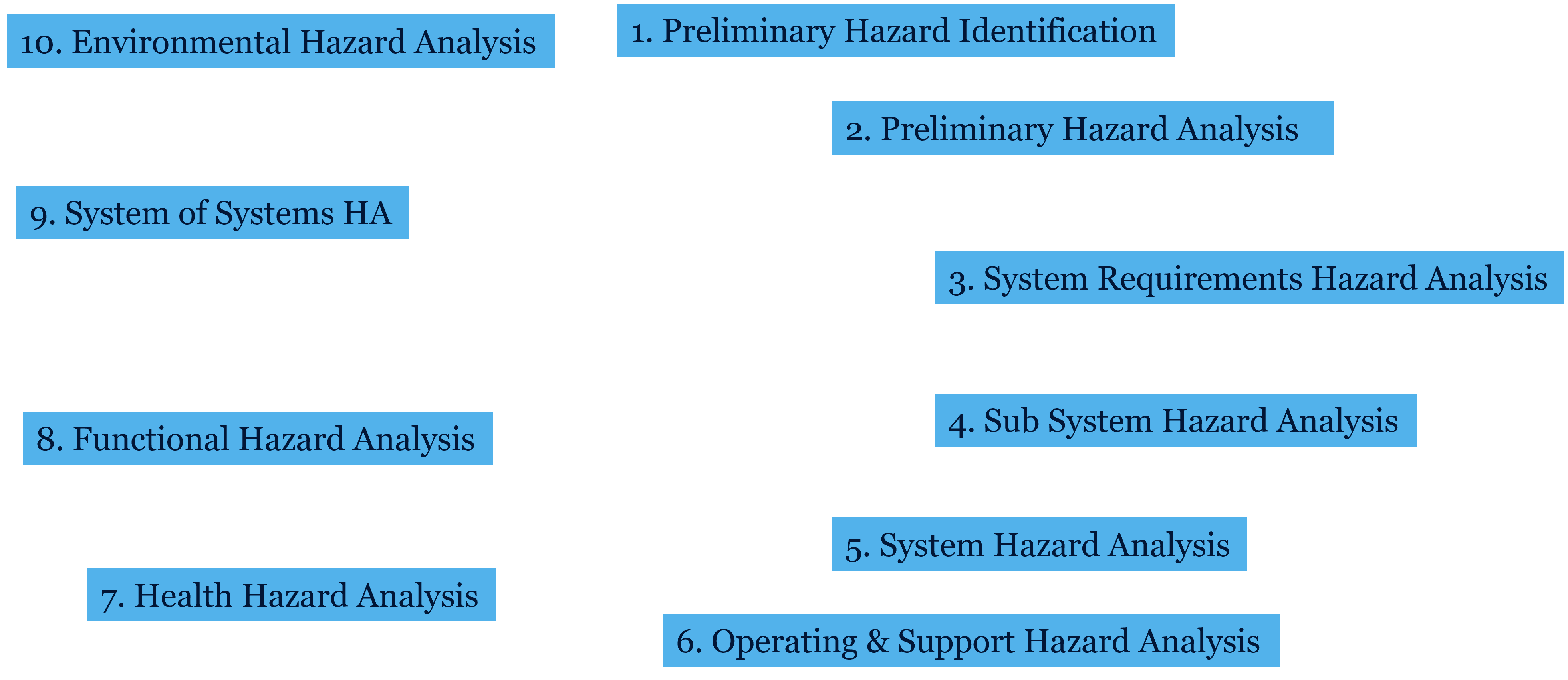
The Delivery Team must identify applicable legislation at the start of the project and continuously update a legislative register as part of the Safety Case.

For more information on this vital task, see the post on System Requirements Hazard Analysis here.Top Tip

3. Creating a Project Safety Organization

Establishing a robust safety management structure is essential to ensure compliance with safety standards and regulations. The Safety Management Plan (SMP) will eventually document the project’s entire safety organization, but before that, some key safety roles need to be defined.

Steps to Set Up Project Safety Organization:

Develop a Project Safety RACI Chart: This chart defines who is Responsible, Accountable, Consulted, and Informed at different stages of the safety process.

Appoint a Competent Project Safety Manager (PSM): This individual is responsible for overseeing safety management throughout the project.

Appoint an Independent Safety Auditor (ISA): For complex or high-risk projects, appointing an ISA is advisable. The ISA ensures that safety audits are conducted independently.

Form a Project Safety Committee (PSC): This group will be responsible for monitoring and governing safety issues within the project.

3. Ensuring Compliance with Safety Regulations

Compliance with safety and environmental regulations is a critical responsibility of the Delivery Team. The following methods ensure compliance across various safety aspects:

Key Compliance Strategies:

- System Specifications: Delivery Teams develop specifications to meet user requirements, ensuring safety and environmental standards are incorporated.

- Through Life Management Plan (TLMP): This plan outlines the long-term impact of safety and environmental legislation on equipment.

- Enterprise Guidance: Use internal guidelines when creating contracts to include safety and environmental performance targets.

Sources for Regulatory and Legislative Information:

To maintain compliance with safety and environmental legislation, teams can access a wide range of resources, including:

- Legislative registers held by the program teams.

- Defense Regulator intranet pages.

- Health & Safety Executive publications and other professional societies.

- Suppliers, contractors, and consultants with expertise in safety and environmental law.

The Delivery Team must identify applicable legislation at the start of the project and continuously update a legislative register as part of the Safety Case.

4. Safety Documentation and Records

Documenting safety processes ensures accountability and maintains a clear safety management trail. These records feed into critical project documentation, including:

- System Specification: Defines specific safety requirements.

- Customer-Supplier Agreement: Documents agreements on safety information.

- Through Life Management Plan (TLMP): Outlines the ongoing safety and environmental impact.

- Safety Elements in Business Case Submissions: Ensures all safety-related information is considered in formal project submissions.

Outputs to Record:

Appointed PSM and ISA, if appropriate;

SMP01_F_01 - Safety Operating Environment QuestionnaireDownload

SMP01_F_02 - Register of Stakeholder Requirements and InformationDownload

SMP01_F_03 - Register of Safety Legislation and Other Significant RequirementsDownload

Proper documentation supports future audits, stakeholder engagement, and compliance efforts. Competent to perform the required responsibilities.

5. Importance of Competence in Safety Management

Competence in safety management is key to project success. The competence of the PSM and ISA must be demonstrated and documented to assure that they can effectively discharge their safety responsibilities.

Consequences of Incompetence or Delays:

Failure to appoint competent individuals or delay the initiation of safety management procedures can lead to:

- Increased risk to project timelines and costs.

- Delayed engagement with stakeholders.

- Overlooked safety and environmental requirements.

Conclusion: Importance of Early Safety Management Initiation

Initiating a structured safety management process at the early stages of a project is crucial for ensuring compliance with safety and environmental standards. By identifying stakeholders, setting up a robust safety organization, ensuring compliance, and maintaining accurate documentation, the project minimizes risks, avoids delays, and maintains clear communication with all involved parties.

Project Safety Initiation: Timing

Initial Application

In an acquisition program, the procedure should be carried out early in the Concept phase.  Stakeholders, system boundaries, supporting systems/arrangements, and acceptance authorities need to be identified as early as possible to support the subsequent Preliminary Hazard Identification activity (Procedure SMP04 – Preliminary Hazard Identification) and the preparation of the SMP.

The procedure can be applied at any point of the life cycle where it is necessary to initiate a formal safety management process.

Review

The registers of stakeholders and requirements should be reviewed and updated after the Outline Business Case and Full Business Case as part of the review and update of the SMP.

New Safety Managers could also use this as a take-over checklist, to make sure all necessary decisions have been made and clearly documented.Top Tip

Acknowledgment of Copyright

In this article, I have used some material from a UK Ministry of Defence guide, reproduced under the terms of the UK’s Open Government Licence.

Meet the Author

Learn safety engineering with me, an industry professional with 25 years of experience, I have:

•Worked on aircraft, ships, submarines, ATMS, trains, and software;

•Tiny programs to some of the biggest (Eurofighter, Future Submarine);

•In the UK and Australia, on US and European programs;

•Taught safety to hundreds of people in the classroom, and thousands online;

•Presented on safety topics at several international conferences.
#EnvironmentalSafetyRegulations #IndependentSafetyAuditor(ISA) #LegislativeComplianceinProjects #projectandstakeholdermanagement #projectcharterstakeholderlistexample #projectgovernancestakeholdermanagement #projectmanagementstakeholderlist #ProjectSafetyOrganization #projectstakeholderanalysisexample #projectstakeholdercommunicationplan #projectstakeholderlisttemplate #projectstakeholdermanagementbestpractices #projectstakeholderregisterexample #SafetyCompliance #SafetyDocumentation #SafetyManagementPlan(SMP) #SafetyManagementProcess #SafetyRACIChart #StakeholderIdentification #whoisprojectstakeholder
Simon Di Nucci https://www.safetyartisan.com/2024/10/02/project-safety-initiation/


Understanding Your Risk Assessment Standard
When Understanding Your Risk Assessment Standard, we need to know a few things. The standard is the thing that we're going to use to achieve things - the tool. And that's important because tools designed to do certain things usually perform well. But they don’t always perform well on other things. So we will ask, ‘Are we doing the right thing?’ And ‘Are we doing it right?’

This post is part of a series:

- Intro to System Safety Risk Assessment

- Start of System Safety Risk Assessment

- Hazard & Risk Basics (SSRAP Module 1)

- System safety risk analysis (SSRAP Module 2)

Video Highlights

Understanding Your Standard: Highlights

Transcript

What and Why?

So, what will we do and why are we doing it? First, the use of safety standards is very common for many reasons. It helps us to have confidence that what we're doing is good enough. We've met a standard of performance in the absolute sense. It helps us to say, ‘We've achieved standardization or commonality in what we're doing’.

We can also use it to help us achieve a compromise. That can be a compromise across different stakeholders or different organizations. Standardization gives us some of the other benefits as well. If we're all doing the same thing rather than we're all doing different things, it makes it easier to train staff. This is one example of how a standard helps.

However, we need to understand this tool that we're going to use. What it does, what it's designed to do, and what it is not designed to do. That's important for any standard or any tool. In safety, it's particularly important because safety is, in many respects, an intangible. This is because we're always looking to prevent a future problem from occurring. In the present, it's a little bit abstract. It's a bit intangible. So, we need to make sure that conceptually what we're doing makes sense and it's coherent. That it works together. If we look at those five bullet points there, we need to understand the concept of each standard. We need to understand the basis of each one.

They’re not all based on the same concept. Thus, some of them are contradictory or incompatible. We need to understand the design of the standard. What the standard does, what the aim of the standard is, and why it came into existence. And who brought it into existence. To do what for whom - who's the ultimate customer here?

For risk analysis standards, we need to understand what kind of risks they address. Because the way you treat a financial risk might be very different from a safety risk. In the world of finance, you might have a portfolio of products, like loans. These products might have some risks associated with them. One or two loans might go bad, and you might lose money on those. But as long as the whole portfolio is making money, that might be acceptable to you. You might say, ‘I'm not worried about that 10% of my loans have gone south and all gone wrong. I'm still making plenty of profit out of the other 90%.’ It doesn't work that way with safety. You can't say ‘It's OK that I've killed a few people over here because all this a lot over here are still alive!’. It doesn't work like that!

Also, what kind of evidence does the standard produce? Because in safety, we are very often working in a legal framework that requires us to do certain things. It requires us to achieve a certain level of safety and prove that we have done so. So, we need certain kinds of evidence. In different jurisdictions and different industries, some evidence is acceptable. Some are not. You need to know which is for your area. And then finally, let's think about the pros and cons of the standard. What does it do well? And what does it do not so well?

System Safety Pedigree

We're going to look at a standard called Military Standard 882E. This standard was first developed several decades ago. It was created by the US government and military to help them bring into service complex, cutting-edge military equipment. Equipment that was always on the cutting edge. That pushes the limits of what you can achieve in performance.

That’s a lot of complexity. Lots of critical weapon systems, and so forth. So they needed something that could cope with all that complexity. It's a system safety engineering standard. It's used by engineers, but also by many other specialists. As I said, it's got a background in military systems. These days, you find these principles used pretty much everywhere. So, all the approaches to System Safety that 882 introduced are in other standards. They are also in other countries.

It addresses risks to people, equipment, and the environment, as we heard earlier. And because it's an American standard, it's about system safety. It's very much about identifying requirements. What do we need to happen to get safety? To do that, it produces lots of requirements. It performs analyses of all those requirements and generates further requirements. And it produces requirements for test evidence. We then need to fulfill these requirements. It's got several important advantages and disadvantages. We're going to discuss these in the next few slides...

This is Module 3 of SSRAP

'Understanding Your Risk Assessment Standard' is Module 3 of the System Safety Risk Assessment Program (SSRAP) Course. Risk Analysis Programs – Design a System Safety Program for any system in any application.

The full course comprises 15 lessons and 1.5 hours of video content, plus resources. It's on pre-sale at HALF PRICE until September 1st, 2024. Check out all the free preview videos here and order using the coupon “Pre-order-Half-Price-SSRAP”. But don't leave it too long because there are only 100 half-price courses available!

Meet the Author

Learn safety engineering with me, an industry professional with 25 years of experience. I have:

•Worked on aircraft, ships, submarines, ATMS, trains, and software;

•Tiny programs to some of the biggest (Eurofighter, Future Submarine);

•In the UK and Australia, on US and European programs;

•Taught safety to hundreds of people in the classroom, and thousands online;

•Presented on safety topics at several international conferences.
#Achievingcomprehensivesystemsafetyassurance #Benefitsofusingsafetystandardsforcomplexsystems #Bestpracticesformanagingsafetyrisks #Bestsystemsafetyengineeringstandard #Comprehensivesafetyanalysistoolsandsoftware #Developinganeffectivesafetyprogram #Effectivehazardidentificationandanalysismethods #Ensuringhighperformancesystemsafety #Howtoimplementsystemsafetyriskanalysisprograms #Implementingengineeringsafetystandards #Legalsafetycompliancetoolsandresources #Meetingcomplexsystemsafetyrequirements #Meetingsafetyrequirementsforhighrisksystems #Safetystandardsformilitaryequipmentsystems #Systemsafetysolutionsforlargeprograms #Tailoringsystemsafetyprogramsforspecificneeds #Toolsforimplementingsafetystandardseffectively #Topriskanalysisstandardsforsafetyprograms #Understandingthepedigreeofsystemsafetystandards #WheretobuyMilitaryStandard882Ecompliancetools
Simon Di Nucci https://www.safetyartisan.com/2024/08/28/understanding-your-risk-assessment-standard/


System Safety Risk Analysis
In this module, System Safety Risk Analysis, we're going to look at how we deal with the complexity of the real world. We do a formal risk analysis because real-world scenarios are complex. The Analysis helps us to understand what we need to do to keep people safe. Usually, we have some moral and legal obligation to do it as well. We need to do it well to protect people and prevent harm to people.

This post is part of a series:

- Intro to System Safety Risk Assessment

- Start of System Safety Risk Assessment

- Hazard & Risk Basics (SSRAP Module 1)

- This is SSRAP Module 2.

Aim: How do we deal with real-world complexity?

- What is System Safety?

- The Need for Process;

- A Realistic, Useful, Powerful process:

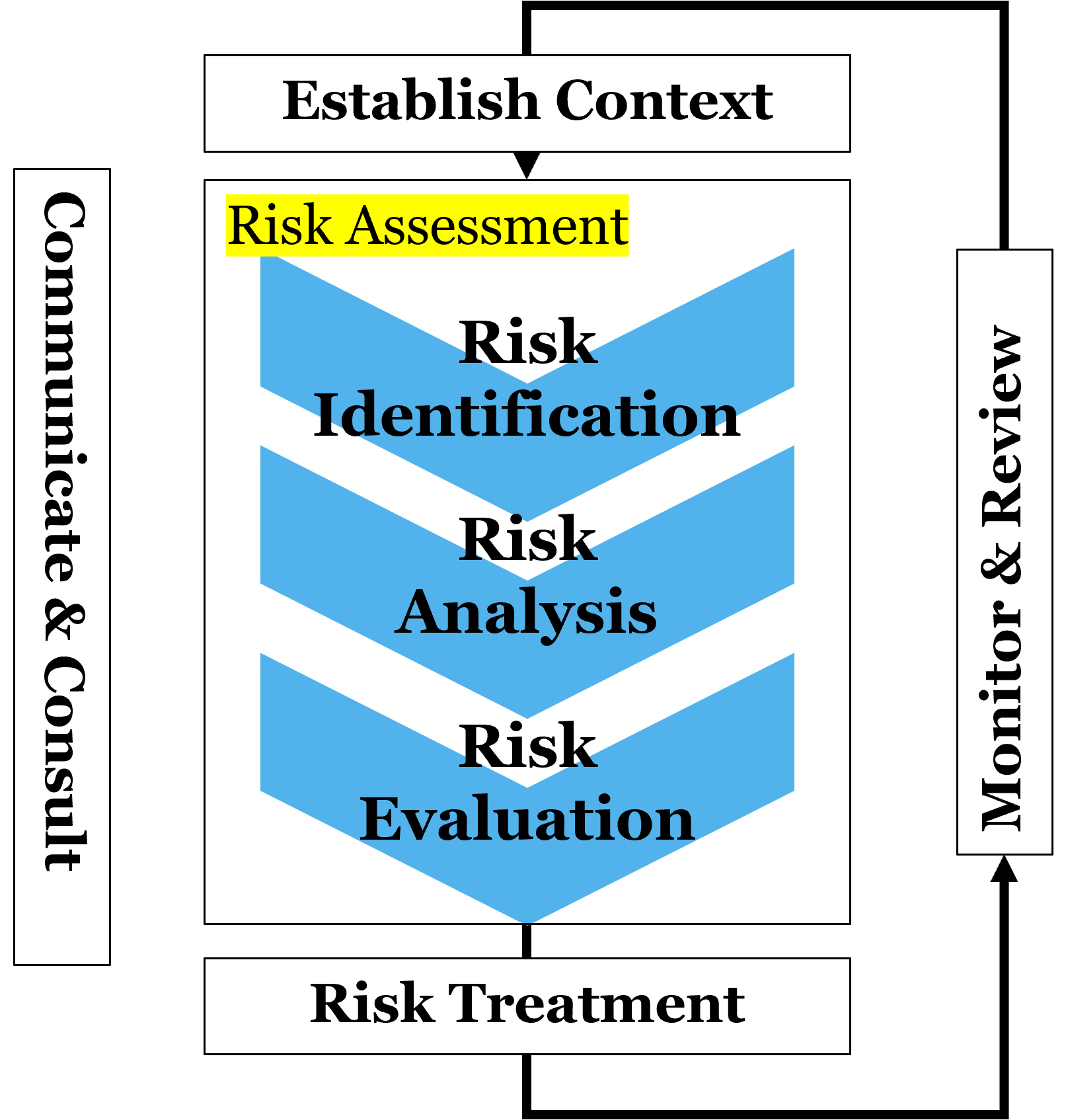
- Context, Communication & Consultation;

- Monitoring & Review, Risk Treatment; and

- Required Risk Reduction.

Transcript: System Safety Risk Analysis

What is System Safety?

To start with, here’s a little definition of system safety. System safety is the application of engineering and management principles, criteria, and techniques to achieve acceptable risk within a wider context.

This wider context is operational effectiveness - we want our system to do something. That's why we're buying it or making it. The system has to be suitable for its use. We've got some time and cost constraints, and we've got a life cycle. We can imagine we are developing something from concept, from cradle to grave.

And what are we developing? We're developing a system. An organization of hardware (or software) material, facilities, people, data, and services. All these pieces will perform a designated function within the system. The system will work within a stated or defined operating environment. It will work to produce specified results.

We've got three things here: a system; the operating environment in which it is designed to work; and, we have its function or application. Why did we buy it, or make it in the first place? What's it supposed to do? What benefits is it supposed to bring humankind? What does it mean in the context of the big picture?

That's what a system is. I'm not going to elaborate on systems theory or anything like that. That's a whole big subject on its own. But we're talking about something complex. We're not talking about a toaster. It's not consumer goods. It's something complicated that operates in the real world. And as I say, we need to understand those three things - system, environment, purpose - to work out Safety.

This is Module 2 of SSRAP

This is Module 2 from the System Safety Risk Assessment Program (SSRAP) Course. Risk Analysis Programs – Design a System Safety Program for any system in any application.

The full course comprises 15 lessons and 1.5 hours of video content, plus resources. It's on pre-sale at HALF PRICE until September 1st, 2024. Check out all the free preview videos here and order using the coupon “Pre-order-Half-Price-SSRAP”. But don't leave it too long because there are only 100 half-price courses available!

Meet the Author

Learn safety engineering with me, an industry professional with 25 years of experience. I have:

•Worked on aircraft, ships, submarines, ATMS, trains, and software;

•Tiny programs to some of the biggest (Eurofighter, Future Submarine);

•In the UK and Australia, on US and European programs;

•Taught safety to hundreds of people in the classroom, and thousands online;

•Presented on safety topics at several international conferences.
#AcceptableRiskCriteria #ALARPPrinciple #ApplyingtheALARPprinciple #Comprehensivesafetyengineeringtraining #Effectiveriskmitigationstrategies #HazardIdentificationandControl #Identifyandcontrolsafetyhazards #LearnSystemSafetyRiskAnalysis #Methodsforriskreductioninsafety #Onlinetrainingforsystemsafetyprofessionals #RealWorldRiskAnalysis #Realworldriskanalysistechniques #RiskMatrixApproach #RiskMitigationTechniques #RiskReductionMethods #SafetyEngineeringPrinciples #SystemSafetyRiskAnalysis #SystemSafetyTrainingOnline #Understandingacceptableriskcriteria #Usingariskmatrixforsafetyanalysis
Simon Di Nucci https://www.safetyartisan.com/2024/08/14/system-safety-risk-analysis/


Hazard and Risk Basics
What are the Hazard and Risk basics? So, what is this risk analysis stuff all about? What is 'risk'? How do you define or describe it? How do you measure it? When? Why? Who...?

In this free session, I explain the basic terms and show how they link together, and how we can break them down to perform risk analysis. I understand hazards and risks because I've been analyzing them for a long time. Moreover, I've done this for aircraft, ships, submarines, sensors, command-and-control systems, and lots of software!

Everyone does it slightly differently, but my 25+ years of diverse experience lets me focus on the basics. That allows me to explain it in simple terms. I've unpacked the jargon and focused on what's important.  

This post is part of a series:

- Intro to System Safety Risk Assessment

- Start of System Safety Risk Assessment

- This post is SSRAP Module 1

- System safety risk analysis (SSRAP Module 2)

-

https://youtu.be/dd30bczHlaI
Recap: Risk Basics

Topics: Hazard and Risk Basics

- Risk & Mishap;

- Probability & Severity;

- Hazard & Causal Factor;

- Mishap (accident) sequence; and

- Hazards: Tests & Example

Transcript: Hazard and Risk Basics

Let's get started with Module One. We're going to recap some Risk basics to make sure that we have a common understanding of risk. And that's important because risk analysis is something that we do every day. Every time you cross the road, or you buy something expensive, or you decide whether you're going to travel to something, or look it up online, instead.

You're making risk analysis decisions all the time without even realizing it. But we need something a little bit more formal than the instinctive thinking of our risk that we do all the time. And to help us do that, we need a couple of definitions to get us started.

What is Risk?

First of all, what is Risk? It's a combination of two things. First, the severity of a mishap or accident. Second, the probability that the mishap will occur. So it's a combination of severity and probability. We will see that illustrated in the next slide.

We'll begin by talking about ‘mishap’. Well, what is a mishap? A mishap is an event - or a series of events -resulting in unintentional harm. This harm could be death, injury, occupational illness, damage to or loss of equipment or property, or damage to the environment.

The particular standard we're looking at today covers a range of different harms. That's why we're focused on safety. And the term 'mishap' will also include negative environmental impacts from planned events. So, even if the cause is a deliberate event, we will include that as a mishap.

Probability and Severity

I said that the definition of risk was a combination of probability and severity. Here we got a little illustration of that...

This is Module 1 of SSRAP

This is Module 1 from the System Safety Risk Assessment Program (SSRAP) Course. Risk Analysis Programs – Design a System Safety Program for any system in any application.

The full course comprises 15 lessons and 1.5 hours of video content, plus resources. It's on pre-sale at HALF PRICE until September 1st, 2024. Check out all the free preview videos here and order using the coupon “Pre-order-Half-Price-SSRAP”. But don't leave it too long because there are only 100 half-price courses available!

Meet the Author

Learn safety engineering with me, an industry professional with 25 years of experience, I have:

•Worked on aircraft, ships, submarines, ATMS, trains, and software;

•Tiny programs to some of the biggest (Eurofighter, Future Submarine);

•In the UK and Australia, on US and European programs;

•Taught safety to hundreds of people in the classroom, and thousands online;

•Presented on safety topics at several international conferences.
#howtoriskassessment #howtoriskassessmentanalysis #learnriskassessment #learnriskassessmentanalysis #riskassess #riskassessment #riskassessmentanalysistechnique #riskassessmentanalysistraining #riskassessmentanalysistutorial #riskassessmenteducation #riskassessmentequation #riskassessmentguide #riskassessmentkeypoints #riskassessmentoutline #riskassessmentquestionstoask #riskassessmentskills #riskassessmenttechnique #riskassessmenttraining #riskassessmenttutorial #riskassessmentvideo #riskmanagement31000pdf
Simon Di Nucci https://www.safetyartisan.com/2024/07/31/ssrap-module-1-risk-basics/

The 2023 Digest The 2023 Digest brings you all The Safety Artisan's blog posts from last year. I hope that you find this a useful resou...